• Skip to primary navigation
  • Skip to main content
  • Skip to primary sidebar

Spencer Critchley

  • Home
  • About
  • Media Appearances
    • Broadcast Appearances
    • Print & Web Coverage
    • My Reporting & Commentary
    • Podcast
    • “Saving Democracy” Events
    • News: Real or Fake?
    • Hallmarks of a #BadArgument
  • Music
  • Photos
  • Subscribe
  • Contact

Politics & Society

Branding and Incantation

December 20, 2018 by Spencer Critchley

One thing that President Trump understands is branding, although with “steel slats” I really think he’s losing his touch (panic will do that to you).

His more successful efforts have included MAGA, Crooked Hillary, Fake News, and, of course the Big, Beautiful Wall, compared to which Steel Slats is New Coke.

Branding is perfect for Trump, whose name is itself a brand, because a brand doesn’t require facts, logic, or any argument at all: just an impression.

This might be a lesson for corporations that have invested so much in creating and building their brands — not least by backing them up with actual goods and services.

Trump sees the power of a brand as pure incantation: simply say the right words the right way, and, as the ancient Irish filid could tell you, the human mind can be ensorceled into believing nearly anything.

Try it: Crooked Hillary. Or Nancy Pelosi.

Do people really know why they’re supposed to hate them? No — unless it’s to recite other powerful though empty incantations, like Benghazi, Uranium One, or (shudder) San Francisco.

In TrumpWorld, it’s brands all the way down.
Filed Under: Communication, Politics & Society Tagged With: branding, communication, Donald Trump, influence, rhetoric

Trump Isn’t Getting Better, America Is Getting Worse

October 28, 2018 by Spencer Critchley

[Also published at Medium.] After the shock of Donald Trump winning the presidency, the hope many of us clung to was that he would grow in office.

Instead, America has shrunk.

There was some reassurance at the beginning, as his poll numbers fell — especially once they reached the low 30s, because 30 percent might as well be zero. As pollsters will tell you, it’s the noise floor of politics: there are always about that many voters who are uninformed, careless, or crazy.

But lately, support for Trump has been rising, at times approaching 50 percent.

This after the Muslim ban, Charlottesville, the attacks on our institutions, the attacks on our allies, the children in cages, the thousands of lies, and on, and on, and on.

Nearly half the country is OK with all that. And a small but growing number of violent extremists are emboldened by it.

We shouldn’t be surprised that Trump isn’t getting better. He really doesn’t seem able to.

But neither should we be surprised that instead, America is getting worse.

We like to say “This is not who we are,” and “We’re better than this.” Normally, those assertions are true.

And yet with the wrong leadership, it is who we are. Yes, America is exceptional. It’s the first country to be founded not on an ethnicity but on an idea, and that idea, freedom and equality for all, is a glorious one.

But Americans are human beings, and human beings are creatures of light and dark, of hope and fear. If a leader constantly summons the worst in us, it will come forth.

History has shown, over and over and around the world, what can happen. Still, we think it couldn’t happen here. Instead we ask, “What was wrong with those people?”

The answer is, they were people. There was nothing wrong with them that isn’t also wrong with us — as a nation of immigrants, we literally are them.

Leadership matters.

But in a democracy, so does citizenship.

We have chosen a terrible leader.

If we want better, we must be better.

Vote.

Filed Under: Leadership & Management, Politics & Society

After Trump, Prepare for the Shame: A Warning for Americans From Occupied France

February 10, 2018 by Spencer Critchley

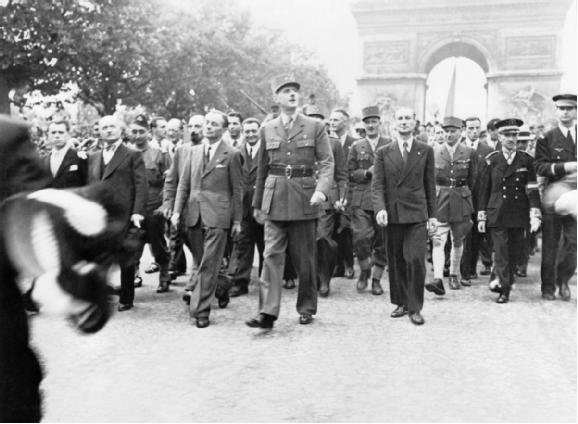
General Charles de Gaulle and his entourage set off from the Arc de Triumphe to Notre Dame for a service of thanksgiving following the city’s liberation in August 1944.
General Charles de Gaulle and his entourage set off from the Arc de Triomphe to Notre Dame for a service of thanksgiving following the city’s liberation in August 1944. Photo: British Ministry of Information / Imperial War Museum, via Wikimedia Commons

[Also published at Medium.] With the Liberation of France in 1944 came a miraculous discovery: the entire nation had resisted the German occupation.

“Paris liberated! Liberated by itself, liberated by its people with the help of the French armies, with the support and the help of all France, of the France that fights, of the only France, of the real France, of the eternal France!” proclaimed General DeGaulle in his victory speech.

It was an inspiring story of courage and resolve. If only it had been true.

But no. The story of universal resistance was a comforting fiction, hiding a complicated and painful reality: while there certainly had been heroic resisters, most of the French had silently cooperated with their occupiers and the puppet Vichy regime. Many had actively collaborated.

What story will we tell, when our time comes? Because the Trump presidency will end, and for many, that will be a time of shame.

Not, of course, the ones who have no shame. But those who see Trump for what he is, and yet remain silent. They mimic the French attentistes, who privately deplored the occupation, but chose to “wait and see.”

When the wait was over, though, it turned out they couldn‘t bear to see.

So they turned to an alternate reality, in which courage was redefined. In an essay for The Atlantic at the end of 1944, philosopher Jean Paul Sartre hailed the heroes of the “Silent Republic.” Their contribution? They could have informed on actual Resistance members, but didn’t.

Some tried to puncture the nation’s self-delusion. In 1947, novelist Jean-Louis Curtis published “The Forests of the Night,” a portrayal of wartime life in a typical French village. As Curtis wrote, resistance was the “rather blurred background” to a far less noble foreground: acquiescence, collaboration, and betrayal.

Curtis’ book won France’s top literary honor, the Prix Goncourt. But it failed to displace the more less realistic fiction his compatriots preferred.

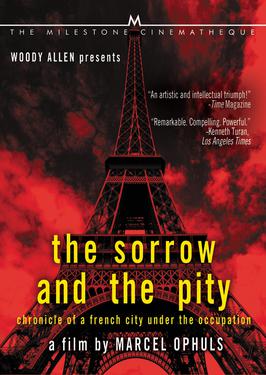
Poster for “The Sorrow and the Pity"
Poster for “The Sorrow and the Pity,” via Wikimedia Commons

A full reckoning with the truth didn’t begin until 1969. That was when film-maker Marcel Ophüls released his quietly harrowing documentary “The Sorrow and the Pity” — which was banned from French TV until 1981. The full meaning of that title is revealed through the first-person accounts of a few brave resisters—and many others who struggle to explain their wartime behavior even to themselves.

“There was one value that we all shared, and that was caution,” offers one.

“I’m trying to remember, but I can’t,” says another.

But the archives did remember. Historian Thomas Paxton studied them exhaustively and, two years after “The Sorrow and the Pity,” he published his findings in “Vichy France: Old Guard and New Order” (1971): most people, some of them eagerly, had aligned with whomever was in power.

A crude graph of French public opinion from 1940 to 1944 would show nearly universal acceptance of Marshal Pétain [head of the collaborationist Vichy government] in June 1940 and nearly universal acceptance of General de Gaulle in August 1944, with the two lines, one declining and the other rising, intersecting some time after… November 1942 [after the Allies landed in North Africa and the Germans occupied the former “Free Zone” of southern France].

After Paxton, assessments of the true strength of French resistance would shift this way and that. But the current judgment of history incorporates the pain of that very uncertainty. As Ronald C. Rosbottom writes in “When Paris Went Dark” (2014):

Even today, the French endeavor both to remember and to find ways to forget their country’s trials during World War II; their ambivalence stems from the cunning and original arrangement they devised with the Nazis, which was approved by Hitler and assented to by Philippe Pétain, the recently appointed head of the Third Republic, that had ended the Battle of France in June of 1940. This treaty—known by all as the Armistice—had entangled France and the French in a web of cooperation, resistance, accommodation, and, later, of defensiveness, forgetfulness, and guilt from which they are still trying to escape.

This web waits for us.

It’s popular to scorn and mock the wartime French. A supposed French propensity for surrender has become a stock joke (one that ignores World War I and much other history).

Book cover: “Vichy France: Old Guard and New Order"
“Vichy France: Old Guard and New Order,” Columbia University Press

But who are we—especially the silent ones among us—to laugh?

To speak out against the German occupation was to risk torture and death.

To speak out against Trump—so far at least—is to risk only embarrassment, strained relationships, or perhaps the loss of some business.

Before we judge the French of World War II, we must ask ourselves if we can honestly say we would have done better. With that in question, their warning should sound all the louder in our ears.

If they felt such shame, how will it be for those of us who find mere inconvenience an excuse to forsake democracy?

And make no mistake, that is what it means to stay silent now, as Yale historian Timothy Snyder, for one, argues so persuasively and concisely in On Tyranny.

When the institutions and norms of democracy are strong, they protect us. But when they are threatened, as elections, the judiciary, law enforcement, the press—and even the truth itself—are threatened now, we are called to protect them.

For most of us, most of the time, democracy is easy. Maybe too easy. We’ve grown awfully comfortable letting a tiny minority serve as its guardians, out of sight, out of mind.

But ultimately, each of us is democracy’s last line of defense. And silence, unavoidably, becomes betrayal.

It’s that hard knowledge which met the attentistes of post-war France. So too the attentistes of post-Trump America.

Speak out, now.

Filed Under: Politics & Society Tagged With: authoritarianism, democracy, Donald Trump, World War 2

African Immigrants Are Better Educated Than Americans

January 18, 2018 by Spencer Critchley

[Also published at HuffPost.] African immigrants are better educated than native-born Americans. 42 percent of African immigrants have a bachelor’s degree or higher; 33 percent of Americans do. Immigrants from Nigeria? 61 percent.

Racism depends on ignorance. And at a time when knowledge is available instantly and for free, ignorance is increasingly a matter of choice.

No one is forced to watch Fox and Friends.

Educational Attainment of Foreign-Born Population from Africa by Selected Country of Birth: 2008-2012

Census data on African immigrants:

https://www.census.gov/content/dam/Census/library/publications/2014/acs/acsbr12-16.pdf

Census data on educational attainment of Americans:

https://www.census.gov/content/dam/Census/library/publications/2016/demo/p20-578.pdf

Just a click away.

Filed Under: Politics & Society Tagged With: Donald Trump, immigration, racism

Will you just “wait and see?”

December 24, 2017 by Spencer Critchley

Marshal Petain
Marshal Henri Philippe Benoni Omer Joseph Pétain
Public domain via Library of Congress and Wikimedia Commons

[Also published at Huffington Post.] Have you ever wondered whether you would speak up if democracy came under attack, as it did in Europe in the 1930’s and 40’s?

That question is being answered now.

Are you speaking up?

Or are you waiting to see how things work out?

There’s a name for that, which comes down to us from occupied France: attentisme.

It means “to wait and see.” After the German army conquered two-thirds of France in a shockingly short six weeks, the French people had to choose: defend the rest of their country, or wait and see.

The government of the Third Republic fled south to Vichy, where it dissolved the Constitution and gave near-dictatorial powers to Marshal Pétain, a hero of World War I whose name is now synonymous with “collaborator.”

And as their freedoms were taken away, and then as their Jewish neighbors were taken away, many, if not most, of the French people chose to be attentistes.

Do you blame them? Do you judge their unwillingness to defend what others had died for?

Well, are you speaking out now, as our elections, judiciary, law enforcement, free press, and the truth itself are under assault?

When your life, unlike lives in occupied France, is not in danger?

Maybe you’re concerned about offending friends, family, colleagues, or business contacts.

Maybe it’s better to wait and see.

Here’s the problem: when the institutions of democracy are under attack, only the people can defend it.

We are the last line of defense, and that defense must be made every step of the way.

If we wait and see, what we may see is that it is too late.

Filed Under: Politics & Society Tagged With: democracy, Donald Trump

  • « Go to Previous Page
  • Page 1
  • Interim pages omitted …
  • Page 17
  • Page 18
  • Page 19
  • Page 20
  • Page 21
  • Interim pages omitted …
  • Page 34
  • Go to Next Page »

Primary Sidebar

Search This Site

Broadcast Appearances

Spencer Critchley on Spectrum News 1 LA

Book

Patriots of Two Nations by Spencer Critchley
Kindle & paperback at Amazon. Audio book at Audible. EPUB format here.

New Music: Jailbreak

Cover image for the song "Jailbreak:" a ruined motel by the side of a lonely desert road.

Podcast

Dastardly Cleverness in the Service of Good

Social Media

Substack

YouTube

Music: The Critchleys

The Critchleys: Owen and Spencer Critchley

About Me

Spencer Critchley

Jump to Recent Posts

New Music: The Desert Mothers

The True Crisis

Outside in the Rain

The Liberal Backbone

Slowly and then all at once

On the Podcast: A Letter to a Friend Voting for Trump

“The War of the Worldviews” at TedX Pugwash

Recent Comments

  • terry rankin on “The War of the Worldviews” at TedX Pugwash
  • Spencer Critchley on Why Biden was right to link MAGA, the Confederacy & the Axis in his SOTU address
  • Spencer Critchley on Why Biden was right to link MAGA, the Confederacy & the Axis in his SOTU address
  • Scott Sexton on Why Biden was right to link MAGA, the Confederacy & the Axis in his SOTU address
  • Anonymous on Why Biden was right to link MAGA, the Confederacy & the Axis in his SOTU address

Photos

Spencer Critchley on Fox News' Cavuto
Barack Obama photo by Spencer Critchley
Bruce Springsteen photo by Spencer Critchley
Jay-Z photo by Spencer Critchley
Tiny American flag in crowd at political rally
Director Elizabeth Thompson & Composer/Audio Producer Spencer Critchley with the Emmy for the PBS documentary "Blink."

Find more photos here.

Privacy Policy

Learn how this site collects information and how you can control that.

© 2005–2026 Spencer Critchley