• Skip to primary navigation
  • Skip to main content
  • Skip to primary sidebar

Spencer Critchley

  • Home
  • About
  • Media Appearances
    • Broadcast Appearances
    • Print & Web Coverage
    • My Reporting & Commentary
    • Podcast
    • “Saving Democracy” Events
    • News: Real or Fake?
    • Hallmarks of a #BadArgument
  • Music
  • Photos
  • Subscribe
  • Contact

racism

The Deeper Roots of Our Crisis: Ethnic Nationalism & the Counter-Enlightenment

June 3, 2020 by Spencer Critchley

The crisis Trump has led us into is driven most visibly by racism, but there’s more to it than that. It’s a crisis of two competing visions of America: whether it is a civic nation or an ethnic nation. Furthermore, it’s about what kind of reality that nation exists in.

(Summarizing from my book…) Before America was founded, every nation was an ethnic nation. National identity and ethnicity were the same thing: a mix of race and culture (bearing in mind that race is a largely mythical concept), tied to a particular land: Greece for the Greeks, Rome for the Romans, Germany for the Germans, France for the French.

A nation might include other ethnicities, often through conquest. But one of the ethnicities would be dominant, and that one would define the nation. It was believed there was an inherent nature to people from a particular land — and that belief persists today, widely, showing up on the political left as well as on the right.

But America was different, or so we thought. It was founded not on ethnicity but on ideas: The Enlightenment-era principles contained in the Constitution. Those principles included Locke and Rousseau’s “social contract” theory: a nation could be bound together not by shared ethnicity but by an agreement among free people. It would be a civic nation, not an ethnic nation.

The trouble is — our trouble is — civic nationalism was never embraced by all Americans. Some insisted there was more to a nation than a contract, and that culture, at least, was essential to it. Some of those insisted that race was too.

So the United States were never fully united. The division tearing us apart now didn’t begin with Trump, and didn’t even begin recently. It originated at the Founding.

It’s a division based on both race and culture — and more. The rejection of civic nationalism was part of a larger rejection of the Enlightenment itself: those who believed a contract couldn’t define a nation also believed that reason alone couldn’t define reality. They believed there must also be faith, intuition, tradition, and other non-rational ways of perceiving, understanding, and deciding. This Counter-Enlightenment worldview is also still widely held.

Trump has brought all of this to the crisis point, but he didn’t create it. And the involvement of not just race but culture and worldview is what makes it so hard to talk about.

Trump is, obviously, a racist, and so are many of his supporters. But many of them sincerely believe, rightly or wrongly, that they aren’t. And addressing what’s going on in terms of racism alone is not adequate to meeting the full scope of our crisis.

One could argue that all Trump supporters are racists, because supporting a racist president is an unavoidably racist choice. But many believe they support Trump because he is defending them against people who are immoral, irreligious, socialistic, or otherwise hostile to how they define American culture, and who represent a worldview they find cold and soulless.

So yes, what we’re seeing is, often enough, racism. But it’s nested within a larger context of ethnic nationalism vs. civic nationalism, which in turn is within a still larger context of an Enlightenment worldview vs. a Counter-Enlightenment worldview.

People who live within those two worldviews have different values and different perceptions, use language differently, and even define truth differently. To people of the Counter-Enlightenment worldview, for example, there is a higher truth than the facts.

All of this is why it’s so hard for the two sides to even talk to each other without concluding the other side is crazy, or evil, or both.
In some cases — in many cases, with Trump himself — what we’re seeing is simply racist white supremacy.

But in others it may be culture, or worldview, or it might be any mix of race, culture, and worldview.

In order to make real progress at healing the division, we have to understand all of it.

Filed Under: Politics & Society Tagged With: Counter-Enlightenment, ethnic nationalism, racism, The Enlightenment, trump

The “Innocent Mistake” Defense for Racism

February 3, 2019 by Spencer Critchley

Slavery was repugnant to many Americans long before America was a country — the Germantown Quakers denounced it in 1688. It was outlawed in the British Empire in 1833. We fought a Civil War over it from 1861-65. Still, injustice and violence against black people continued, and that has been an issue every minimally educated person has known about ever since, through Reconstruction, Jim Crow, the rise of the KKK, the 1909 founding of the NAACP, “Strange Fruit” (1939), the civil rights movement, landmark legislation, assassinations, the Southern Strategy, birtherism, voter suppression, and Charlottesville.

When the movie “Birth of a Nation” was released, it sparked widespread protests over its celebration of the KKK and demeaning depictions of black people. That was in 1915. More than a hundred years ago.

Harry Truman was born in 1884 and raised as a racist in a pro-Confederate family in rural Missouri. But he, like many white Americans of his time, was able to learn, to feel compassion, and to change. In 1947 he said, “If this freedom is to be more than a dream, each man must be guaranteed equality of opportunity. The only limit to an American’s achievement should be his ability, his industry and his character.” And the next year he desegregated the military.

That was more than 70 years ago — and even then, it was a common belief that what progress had been made had taken far too long.

Also in 1947, Frank Sinatra, who had been raised in a working class family and never finished high school, said this: “We’ve got a hell of a way to go in this racial situation. As long as most white men think of a Negro as a Negro first and a man second, we’re in trouble. I don’t know why we can’t grow up.”

Every American alive today has the benefit of centuries of thinking on civil rights, and centuries of examples of people who managed to choose respect and kindness over bigotry and cruelty. All the information about this that anyone could ever need has long been available easily and for free.

So maybe, by 2019, the “innocent mistake” defense is done?

Beyond a certain point, ignorance becomes a choice, and “innocence” is just a cloak.

Filed Under: Politics & Society Tagged With: civil rights, racism

African Immigrants Are Better Educated Than Americans

January 18, 2018 by Spencer Critchley

[Also published at HuffPost.] African immigrants are better educated than native-born Americans. 42 percent of African immigrants have a bachelor’s degree or higher; 33 percent of Americans do. Immigrants from Nigeria? 61 percent.

Racism depends on ignorance. And at a time when knowledge is available instantly and for free, ignorance is increasingly a matter of choice.

No one is forced to watch Fox and Friends.

Educational Attainment of Foreign-Born Population from Africa by Selected Country of Birth: 2008-2012

Census data on African immigrants:

https://www.census.gov/content/dam/Census/library/publications/2014/acs/acsbr12-16.pdf

Census data on educational attainment of Americans:

https://www.census.gov/content/dam/Census/library/publications/2016/demo/p20-578.pdf

Just a click away.

Filed Under: Politics & Society Tagged With: Donald Trump, immigration, racism

Yes, Judge What Happened In Charlottesville — And Then What?

August 13, 2017 by Spencer Critchley

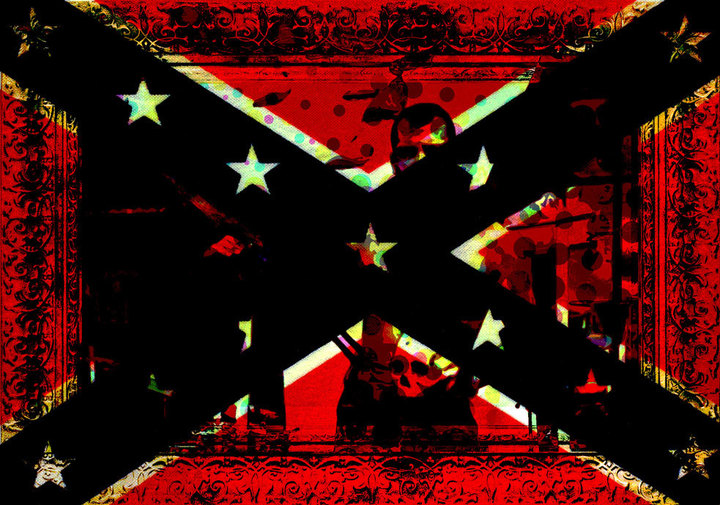
Confederate flag photo illustration
AK Rockefeller, Foter.com

[Also published at Huffington Post.] We have to call out horrors like what happened yesterday, and there’s value in doing it: to make it clear what America is and what it cannot be.

At the same time, I think there’s also a risk in having such obvious villains as Nazis and KKK members to point to, because it’s so easy to denounce them, feel good about ourselves, and move on.

In day-to-day life, people don’t wear swastikas. Almost no one thinks of themselves as a bigot. But we all have at least some fear or hatred of others within us. If we refuse to see it, we create an internal darkness similar to the one that allows bigotry to grow in society as a whole.

And whatever’s going on inside each of us, it’s what each of us does that matters. Judging others just distracts us from what matters.

Warning, it’s about to look like I’m going to blame the other party, feel good, and move on ― if you think that, please read on to, “And we Democrats…”

Right now it matters that Republican leaders don’t just make stronger statements than Trump’s ― an easy test to pass ― but that they stop acting to enable bigotry. They do that not just by supporting Trump’s bigoted policies, but by advancing their own, like their longstanding efforts to suppress the minority vote under the pretense of stopping nearly nonexistent voter fraud.

And individual Republicans, whatever they feel in their hearts, need to stop enabling a Republican Party that has welcomed racists since the mid-1960s. The Nixon campaign designed the Southern Strategy, and the party kept on using it, even after former GOP chair Ken Mehlman apologized for it. Under the Southern Strategy, explicit racial slurs were replaced with code phrases like “states rights,” “welfare cheats,” and “law and order.” The only difference with Trump is that he has dropped the veil that had been hiding the naked racism.

And we Democrats should be careful of using Republican bigotry as a free pass. Yes, our party has been on the right side of civil rights since the ’60s. I’m not suggesting a false equivalence. But there are issues like affordable housing, for example, in which many liberals support zoning regulations that have the effect of keeping neighborhoods segregated, without anyone having to look too hard at how it happens.

The challenge is to see clearly, especially when it’s uncomfortable ― it’s so much easier to see where other people are falling short ― and more importantly, to do things that make a difference.

So of course we have to call out horrors like Charlottesville. But we also have to be able to talk openly and usefully among ourselves, when there isn’t such obvious evil to decry, and find ways to change things that need to change. I think that means avoiding the distracting temptation to judge each other ― at worst, getting into ever-escalating moral purity contests ― and it also means avoiding the temptation to judge ourselves.

See ourselves, yes. But too often judgment is like a heat sink ― energy that could be used for change just gets converted to guilt, and lost.

None of us is morally pure. But each of us, in all our impurity, can make things better.

Filed Under: Politics & Society Tagged With: Donald Trump, racism

I get that bigots aren’t ashamed of being bigots — but why aren’t they ashamed of being cowards?

December 7, 2015 by Spencer Critchley

Donald Trump photo by Michael Vadon [CC BY-SA 2.0 (http://creativecommons.org/licenses/by-sa/2.0)], via Wikimedia CommonsDonald Trump believes we should have a “total and complete* shutdown” of all U.S. immigration by Muslims. And the idea got him a standing ovation at a rally today.

OK, I get that bigots feel no shame over being bigots.

But how is it they feel no shame over being cowards?

Obviously, they are cowards — bigotry is born of fear plus ignorance.

But one thing cowards fear most is being seen as cowards. That’s why cowards tend to be such blowhards — blowhards like Donald J. Trump.

And yet here we have thousands of people at rallies, and presumably millions across the country, just fine with trumpeting (Trumpeting?) the sad fact:

“We’re cowards!”

I don’t get it.

*And redundant.

Photo: By Michael Vadon [CC BY-SA 2.0], via Wikimedia Commons

Filed Under: Politics & Society Tagged With: bigotry, Donald Trump, Islamophobia, racism

Primary Sidebar

Search This Site

Broadcast Appearances

Spencer Critchley on Spectrum News 1 LA

Book

Patriots of Two Nations by Spencer Critchley
Kindle & paperback at Amazon. Audio book at Audible. EPUB format here.

New Music: Jailbreak

Cover image for the song "Jailbreak:" a ruined motel by the side of a lonely desert road.

Podcast

Dastardly Cleverness in the Service of Good

Social Media

Substack

YouTube

Music: The Critchleys

The Critchleys: Owen and Spencer Critchley

About Me

Spencer Critchley

Jump to Recent Posts

New Music: The Desert Mothers

The True Crisis

Outside in the Rain

The Liberal Backbone

Slowly and then all at once

On the Podcast: A Letter to a Friend Voting for Trump

“The War of the Worldviews” at TedX Pugwash

Recent Comments

  • terry rankin on “The War of the Worldviews” at TedX Pugwash
  • Spencer Critchley on Why Biden was right to link MAGA, the Confederacy & the Axis in his SOTU address
  • Spencer Critchley on Why Biden was right to link MAGA, the Confederacy & the Axis in his SOTU address
  • Scott Sexton on Why Biden was right to link MAGA, the Confederacy & the Axis in his SOTU address
  • Anonymous on Why Biden was right to link MAGA, the Confederacy & the Axis in his SOTU address

Photos

Spencer Critchley on Fox News' Cavuto
Barack Obama photo by Spencer Critchley
Bruce Springsteen photo by Spencer Critchley
Jay-Z photo by Spencer Critchley
Tiny American flag in crowd at political rally
Director Elizabeth Thompson & Composer/Audio Producer Spencer Critchley with the Emmy for the PBS documentary "Blink."

Find more photos here.

Privacy Policy

Learn how this site collects information and how you can control that.

© 2005–2026 Spencer Critchley