• Skip to primary navigation
  • Skip to main content
  • Skip to primary sidebar

Spencer Critchley

  • Home
  • About
  • Media Appearances
    • Broadcast Appearances
    • Print & Web Coverage
    • My Reporting & Commentary
    • Podcast
    • “Saving Democracy” Events
    • News: Real or Fake?
    • Hallmarks of a #BadArgument
  • Music
  • Photos
  • Subscribe
  • Contact

Politics & Society

How Do You Tell If News Is Reliable? Here’s One Simple Tip

February 3, 2020 by Spencer Critchley

Even well-educated people often have trouble judging the quality of news outlets. Here’s a simple but very effective tip: look for paragraphs like this one, from an recent article in the Washington Post:

This account of how McConnell and enough Senate Republicans blocked witnesses from entering Trump’s trial — the issue that was most in question during the contentious proceedings — is based on interviews with 13 senators and other officials familiar with the deliberations who spoke on the condition of anonymity to talk frankly.


You just won’t see careful, accountable sourcing like this in unreliable or outright fake news sources. Instead, you’ll find heavily biased sources mixed with unsourced assertions.

But what if the Post just made up those sources it claims it has? No mainstream news source does that, and the claim that they do is simply a lie, told by people who benefit from undermining trust in the facts.

To be a mainstream news outlet is to follow the rules of news reporting. Those rules are well understood, carefully guarded, and strictly enforced when they’re broken. On the rare occasions when a mainstream reporter actually has invented sources, that reporter has been fired and the outlet has published prominent corrections. For example, see the case of former New York Times reporter Jayson Blair from 2003.

Mainstream news outlets follow the rules of reporting partly because their staff actually believe in those rules and that’s why they became journalists, more pragmatically because those staff members are in the profession of uncovering and publicizing wrongdoing and so are the worst kind of people to try to enlist in a coverup, and even more pragmatically because the mainstream outlets’ business model depends on it: their advertisers want to reach a large audience of the kind of people who want reliable news, and corporations, investors, and others who are making critical decisions need reliable news on which to base those decisions. Unreliable news would cost them a lot, and so they would get their news from some other outlet they could trust.

Unreliable news outlets make their money by selling sensation; reliable ones make their money by selling accurate information. Apart from the real ethical considerations involved for mainstream outlets in following the rules, it would just be stupid for them to do anything else.

Filed Under: Journalism, Politics & Society Tagged With: fake news, media literacy

Bernie Isn’t Really a Socialist, But Everyone Thinks He Is. That’s a Very Big Problem.

January 29, 2020 by Spencer Critchley

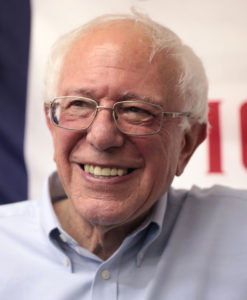
Photo: Gage Skidmore

I’ll have no hesitation voting for Bernie if he becomes the nominee, but if he does, I’ll want him to win — the country will need him to win.

But he faces a huge, obvious obstacle, and instead of dealing with it, he and his supporters are dismissing it: almost everyone thinks he’s a socialist, and that is a probably fatal brand for a general election candidate.

Instead of addressing that problem head on, Bernie keeps running on his policies. Many of his supporters, meanwhile, dismiss any talk of the socialism issue as an establishment conspiracy.

It seems to show a lack of even a basic grasp of branding’s importance. That, or a reckless lack of concern with it. 

How important is it? Well, Donald Trump is nothing but branding, and he’s the president — and thanks to nothing more than branding, he may be again.

Bernie says it’s incorrect to call him a socialist — as if correcting the facts could be nearly enough in this world. And then, perplexingly, he goes on calling himself a socialist.

Or rather, a Democratic Socialist, which he says is different. Doesn’t help at all.

The trouble is, no mere adjective like “Democratic” will make any difference in branding terms — and furthermore it just adds to the confusion, because Bernie isn’t really a Democratic Socialist either.

I take him at his word about not being a socialist. So do actual socialists like Noam Chomsky, who calls Bernie a “New Dealer” in the mode of Franklin Delano Roosevelt.

And the Democratic Socialists of America say Bernie isn’t a socialist. The trouble is, most of them say he also isn’t one of them — because they really are socialists and, again, Bernie isn’t.

So he isn’t a socialist and he isn’t a Democratic Socialist. What is he? By all appearances, Bernie is a Social Democrat, also known in the USA as a progressive.

The difference matters a great deal: a socialist wants to destroy capitalism, while a Social Democrat wants to reform it.

And in addition to that substantial difference, please note the all-important branding contrast: one phrase lands on “Socialist,” the other on “Democrat.” What people hear and remember is that last word.

Although Social Democrats are pretty far left by modern American standards, they’re still within the mainstream — to this day, FDR is one of the most respected of all presidents. But socialists are well outside the mainstream, and always have been, going back to Eugene Debs’ Socialist Party of America in the early 20th Century. In multiple presidential campaigns, Debs never won a single electoral vote, and despite a brief surge during the Depression (and before the truth about the Soviet Union became widely known), socialism has been a fringe position ever since.

Yet Bernie keeps on calling himself a Democratic Socialist, which both sounds like it means an outright socialist, and, according to most Democratic Socialists, actually does mean that.

In branding himself a socialist while arguing that he isn’t one, Bernie imposes a heavy and needless drag on his own campaign. It’s like starting the Day-Old Bread Company and then having to spend all your time convincing people “I didn’t mean it! The bread’s actually fresh!”

Now some will argue that this is all wrong, that the world is changing, and the socialist brand is no longer a handicap. After all, polls show socialism is more popular these days, especially among the young. 

But those polls also show that most of the population still fears and hates socialism. Presidential elections are typically won by a few percentage points. Why spend a campaign fighting to change how tens of millions of people feel about a word, when you could be fighting to win their votes?

Others will point out that Bernie is leading in key primary states. But Democratic primaries, especially these early ones that split the vote among so many candidates, are very different from a general election. It’s the general election that Bernie has to win, and it’s the general election in which he would will face a Trumpstorm of anti-socialist attacks.

Furthermore, even among the minority of Americans who say they like socialism, many are as unclear about what that means as Bernie is. 

Like Bernie himself, what many of his supporters call socialism is actually Social Democracy. In describing what they want, they often cite the Scandinavian countries and their generous, forward-looking social programs. The trouble is, none of those countries is socialist. 

Or they may point to FDR. But again: not a socialist. He was a progressive.

Or they may note that like all modern economies, ours already has socialist components, such as the military, public roads, and Medicare. But full-on socialism goes way farther. It means government control of the whole economy. 

And except for a few failed holdouts like North Korea, every country that has tried that has abandoned it.

The reason has nothing to do with whether or not the people of those countries still believed in making things better. It’s that socialism made things worse.

The problem was complexity. It turned out that Marx’s Industrial Age theory of how societies work was over-simplified. An economy based on it just couldn’t keep up with the nearly infinite complexity of humans interacting with each other in unpredictable, often irrational ways. In retrospect it shouldn’t be surprising: Marx predated Freud by nearly 50 years, and complexity theory by more like 150 years.

So socialist economies stall, because theory keeps falling short of practice. Not enough wealth is generated to be worth redistribution.

Then there’s the equally serious problem of freedom in a fully socialized economy. Starting with the limits on who can own what, centralized control requires a greater reduction in individual freedom than most Americans have ever experienced. Fans of collectivism may say, “So what?“ But whether you like it or not, individualism is woven throughout American culture. Good luck changing that between now and Nov. 3.

As voters who think they’re socialists learn more about what it really means, many are likely to think again.

And Trump will be happy to help them along with an aggressive, entirely bad-faith education campaign.

If Bernie wins the nomination, he will be hit with the “socialist” brand all day, every day — by someone whose one demonstrable skill is wielding the emotional power of brands, divorced from any basis in fact, let alone confusing nuances like “Democratic Socialist.”

Crooked Hillary. Deep State. The Server. Witch Hunt.

Radical Socialist. 

As deployed by Trump and his enablers, “socialist” won’t just mean someone who wants to give you good health care, education, and jobs, and is willing to raise taxes to do it. It will mean a dangerous extremist threatening you with a failed, oppressive system whose economics even Russia and China gave up on.

It won’t be a fair description of Bernie, but in our elections, fair isn’t on offer. Certainly not from Trump.

In the face of relentless, expertly targeted fear-mongering, Bernie will be stuck explaining how he isn’t really what he says he is.

There’s an old saying in politics: If you’re explaining, you’re losing. If you’re explaining what kind of socialist you are? Prepare to lose big.

Of course, especially in the age of Trump, we have to recognize that no one can predict the future. It could be that we get another big surprise and President Sanders is sworn in next January.

But we can predict risk.

And calling the risk Bernie faces an “establishment conspiracy“ won’t make it go away. On the contrary, if you want to see what an establishment conspiracy really looks like, just wait and see what the Trump campaign and its partners, domestic and foreign, have in store.

Bernie could become the nominee, as those polls he’s leading do show. If he does, we’ll need him to run a campaign that can win.

The “political revolution” he promises is a statement of faith, not a campaign strategy. A campaign strategy would show how a victory can happen in the world we have, not in one that somehow comes into being between now and Election Day.

Filed Under: Communication, Politics & Society Tagged With: Bernie Sanders, Democratic Socialsim, election 2020, social democracy. Alexandria Ocasio-Cortez, socialism

Mike Pompeo’s Meltdown & the Sad State of the Strong Man

January 26, 2020 by Spencer Critchley

Silhouette of a walking man
iStock

Along with everything else we’re dealing with, there’s the sad state of the strong man. Not the Strong Man, like the currently popular Putin. The actual strong man.

It’s good that our understanding of what it means to be a man has evolved. But there are some traditional values that remain valuable, like courage, integrity, humility, and using your strength to protect people, not to prey on them.

A bully is a sad imitation of that, and in reality is its opposite.

A bully is a weak, frightened boy in a man’s body, putting on a noisy show.

Trump is a classic bully. But as I’ve said before, he isn’t the cause of what’s gone wrong with our country, he’s a symptom, and that applies to the state of manhood as well. It’s not Trump’s fault that such a flagrantly phony “tough guy” could be taken for the real thing. The fault, dear Brutus, is in ourselves.

And so with Trump’s Secretary of State and former CIA Director, Mike Pompeo. NPR’s Mary Louise Kelly recently asked him the tough but fair questions any serious reporter would have asked, instead of only the safe ones he wanted to answer. He ended the interview and then yelled and swore at her for about 10 minutes.

She was just doing her job, and he fell apart.

Embarrassing.

The contrast between the two of them raises yet another traditional value of the truly strong man: capability. Bullies are typically incompetent. It’s one reason for their inner sense of weakness (along with the bullying they themselves have often suffered in childhood).

Pompeo, like his boss, checks the incompetence box too. He’s been in the public eye for a long time, but doesn’t seem to know that real reporters don’t make deals like the one he claims he had with Kelly. And as the record shows, he didn’t have such a deal.

He also doesn’t seem to know how “off the record” works: wishing his post-interview meltdown had been off the record doesn’t make it so.

And he didn’t know how to avoid humiliating himself even further by demanding that an experienced foreign affairs journalist with a Master’s in European Studies find Ukraine on an unlabeled map. I guess he thought that was hard, but she didn’t.

It was a classic bully’s move. Kelly shouldn’t have had to pass such a test, though she easily did.

But Pompeo, true to form for a bully, failed a mild test of the strength he can only pretend to have.

Filed Under: Leadership & Management, Politics & Society Tagged With: manhood, masculinity, mike pompeo, traditional values

It’s Not Only the Right That Attracts Authoritarians

January 26, 2020 by Spencer Critchley

Graph: Will you support another Democratic nominee?

There sure are a lot of absolutists in Bernie-world: according to a recent poll conducted by Emerson College, 47 percent of them won’t commit to voting for any other Democratic nominee.

But they’re not alone: a significant percentage (28) of all Democrats are equally obsessed with getting everything they want. To that end they would sacrifice the people they claim to serve to another four years of Trump.

Ideological purism doesn’t fully capture this. Maybe we need to accept that it’s not just the right that attracts the authoritarian personality type.

Because if you truly believe in the greater good, how hard can it be to commit to voting for any of the Democrats over Trump?

(Note that the Emerson poll has an overall margin of error of +/- 2.8%, but it will be larger for subsets of the sample, such as supporters of individual candidates.)

Filed Under: Politics & Society Tagged With: authoritarianism, Bernie Sanders, election 2020, intolerance

The Democrats’ Circular Firing Squad Is In Full Effect

January 20, 2020 by Spencer Critchley

There’s nothing we Democrats like better than a fight — with each other.

Even now, when we face a threat analogous to a giant asteroid hurtling towards Earth, our response is to form a circular firing squad.

As we see with the current Bernie-Elizabeth battle. It has hurt both of them while helping Trump, by providing new themes for his attack ads:

“Bernie Sanders hates women!”

“Elizabeth Warren loves fat cats!”

Neither of these charges — originating, remember, with Democrats — is remotely likely to be true. But what does Trump care?

Truth is for chumps, not Trumps.

Am I arguing that the Democratic primary candidates shouldn’t criticize each other? Of course not. The point of a primary is debate.

But attacking the character of a candidate from your own party is both destructive and strategically stupid:

  • The odds are, and never more so than now with such a crowded field, that you are not going to be the nominee. If you damage the person who is, you are hurting your side’s cause in the general election.
  • You’re damaging your own cause, too. If and when you eventually have to praise the candidate you’re now attacking, your personal brand will take on a heavy admixture of “just another political hack.” (Hi there, Lindsey Graham.)
  • And although the conventional wisdom says candidates must show their “toughness” like this, that advice comes from consultants who should have learned better after losing so many elections. Democrats have a natural electoral advantage against a Republican Party that mostly serves the rich by exploiting the anger of rural whites. And yet, going back to the 1960’s, Democrats have managed to lose more than they win.

Yes, toughness can be good. But it falls flat when there’s too much show in the showing. Then the attacker looks the opposite of tough: fearful, reactive, and led — by circumstances, staff, and polls — instead of leading.

That’s the impression left by Elizabeth Warren’s charge that Bernie told her a woman is unlikely to be elected President.

It’s also the impression left by Bernie supporters, with what looks like his tacit approval, when they claim that the formerly Republican Warren is secretly in the pocket of the plutocrats she now goes after.

Neither claim is credible, and both do more harm than good, to both candidates, to Democrats overall, and, in this election, to democracy itself, which is under attack by the worst president in history — the giant asteroid.

Lately, we hear there’s a truce between the Sanders and Warren factions. A hopeful sign?

Nope. The point of the truce appears to be to enable both camps to train their fire on moderates like Biden and Buttigieg — or Steyer, Bloomberg, Klobuchar, or Yang, if and when any of those surges in the polls.

Again, should there be a vigorous debate of policy? Yes, yes, yes. But to claim, for example, that Joe Biden is against Social Security, as we hear now from the Sanders campaign?

Destructive and strategically stupid.

In citing Sanders and Warren, I don’t mean to suggest that it’s only progressives who join the circular firing squad. In this primary, moderates like Kamala Harris, Eric Swalwell, and even the usually Buddha-like Cory Booker resorted to friendly fire, before dropping out of the race. In the 2008 primary, Hillary Clinton (whose 2016 campaign I did some work for), engaged in some shameful attacks on fellow moderate Barack Obama (both of whose campaigns I worked for).

If the circular firing squad had somehow produced a record of success, volunteering for it might make some sense. But ask Hillary, Kamala, Eric, Cory, and the rest how well it worked for them. Then compare the records of happier warriors like Ronald Reagan, Bill Clinton, Obama, and, in the current cycle, Biden, who have kept their eyes on the true prize.

Unlike with a real firing squad, no one is forced to serve on a political one. The candidates, and we their supporters, can simply decline the invitation to participate in mutually assured destruction.

Is it too much to ask?

UPDATE, Jan. 21, 2020: Just in the two days since this was posted we’ve seen two more volleys by the circular firing squad:

  • The Bernie Sanders campaign circulated an op-ed accusing Joe Biden of “corruption.” So if Biden becomes the nominee, as is entirely likely, the Trump campaign will be able to quote Bernie saying he’s corrupt. And Bernie (to be precise, his campaign) said it just before the impeachment trial, during which Trump will try to make the same claim. This was, as I argue above, destructive and strategically stupid. I’m glad to see Bernie has since apologized.
  • Hillary Clinton was quoted as saying “nobody likes” Bernie Sanders and that she couldn’t commit to endorsing him if he becomes the nominee. If he does, Trump will quote her saying Bernie “got nothing done” in Congress and that he’s “all baloney.” Hillary’s comments were destructive and stupid, too. I’m only sort of glad to see that Hillary has only sort of backpedaled.
Illustration of a circular firing squad aiming at the year 2020.

Filed Under: Politics & Society, Uncategorized Tagged With: 2020 election, Democratic Party

  • « Go to Previous Page
  • Page 1
  • Interim pages omitted …
  • Page 12
  • Page 13
  • Page 14
  • Page 15
  • Page 16
  • Interim pages omitted …
  • Page 34
  • Go to Next Page »

Primary Sidebar

Search This Site

Broadcast Appearances

Spencer Critchley on Spectrum News 1 LA

Book

Patriots of Two Nations by Spencer Critchley
Kindle & paperback at Amazon. Audio book at Audible. EPUB format here.

New Music: Jailbreak

Cover image for the song "Jailbreak:" a ruined motel by the side of a lonely desert road.

Podcast

Dastardly Cleverness in the Service of Good

Social Media

Substack

YouTube

Music: The Critchleys

The Critchleys: Owen and Spencer Critchley

About Me

Spencer Critchley

Jump to Recent Posts

New Music: The Desert Mothers

The True Crisis

Outside in the Rain

The Liberal Backbone

Slowly and then all at once

On the Podcast: A Letter to a Friend Voting for Trump

“The War of the Worldviews” at TedX Pugwash

Recent Comments

  • terry rankin on “The War of the Worldviews” at TedX Pugwash
  • Spencer Critchley on Why Biden was right to link MAGA, the Confederacy & the Axis in his SOTU address
  • Spencer Critchley on Why Biden was right to link MAGA, the Confederacy & the Axis in his SOTU address
  • Scott Sexton on Why Biden was right to link MAGA, the Confederacy & the Axis in his SOTU address
  • Anonymous on Why Biden was right to link MAGA, the Confederacy & the Axis in his SOTU address

Photos

Spencer Critchley on Fox News' Cavuto
Barack Obama photo by Spencer Critchley
Bruce Springsteen photo by Spencer Critchley
Jay-Z photo by Spencer Critchley
Tiny American flag in crowd at political rally
Director Elizabeth Thompson & Composer/Audio Producer Spencer Critchley with the Emmy for the PBS documentary "Blink."

Find more photos here.

Privacy Policy

Learn how this site collects information and how you can control that.

© 2005–2026 Spencer Critchley