• Skip to primary navigation
  • Skip to main content
  • Skip to primary sidebar

Spencer Critchley

  • Home
  • About
  • Media Appearances
    • Broadcast Appearances
    • Print & Web Coverage
    • My Reporting & Commentary
    • Podcast
    • “Saving Democracy” Events
    • News: Real or Fake?
    • Hallmarks of a #BadArgument
  • Music
  • Photos
  • Subscribe
  • Contact

Politics & Society

Unarmed on the Battlefield of Democracy

June 24, 2020 by Spencer Critchley

One reason we have Trump is that we toss citizens onto the battlefield of democracy without giving them the weapons they need to defend themselves. We call it freedom, but it’s the freedom to choose among different ways of losing.

Isaac Cruikshank, Debating Society (Substitute for Hair Powder). London: Published by Laurie & Whittle, May 5, 1795. Etching and engraving via Wikimedia Commons.
Isaac Cruikshank, Debating Society (Substitute for Hair Powder), 1795. Public domain via Wikimedia Commons.

For example, a citizen should know how to have a useful debate. But few people ever learn the basic skills — as we see endlessly demonstrated on social media.

A useful debate is a joint attempt to prove or disprove a statement based on valid evidence and logic. It’s impossible to lose a useful debate. If I have to yield to the other person’s point, it means I’ve learned something. That’s a win. Losing is stubbornly sticking with being wrong.

But we seldom have useful debates. What we get instead is a series of infinitely branching assertions or insults, leading nowhere except to exhaustion and settled entrenchment in existing opinions. Neither side seems to realize they’re just doing it wrong.

And both sides lose.

There are winners, though: unscrupulous leaders who profit when citizens lose track of the thread. Nothing better for a demagogue than to distract and divide the citizenry with squabbling over anything and everything except what actually matters.

See my guide to the Hallmarks of a Bad Argument.

Filed Under: Communication, Politics & Society

Here’s How the Founder of Trump University Raises Money for His Campaign

June 21, 2020 by Spencer Critchley

Thought you might like a peek at how the founder of Trump University raises money for his campaign. I somehow ended up on one of his lists.

Trump-Pence campaign fund-raising email promising membership in an exclusive club of 100 Patriots who will supposedly advise Trump.

Text version:

Friend,

You were selected as 1 of the 100 Patriots in the entire Nation who President Trump invited to join the Trump 100 Club [GOSH REALLY? ME?], but we noticed you haven’t accepted your offer yet.

Trump 100 Club Members are going to be the ones President Trump relies on when he needs the advice of the American People. He’ll be counting on the feedback from this exclusive new club to represent the views of millions of voters. [WOW! NO WAY THIS IS BULL.]

91 of the other Patriots invited have already accepted their offer. We’re just waiting on you.

Please contribute ANY AMOUNT TODAY to join the Trump 100 Club. [$5 GETS ME IN! MAKES SENSE… MAYBE I COULD EVEN GET INTO TRUMP U!]

Filed Under: Communication, Politics & Society

The Deeper Roots of Our Crisis: Ethnic Nationalism & the Counter-Enlightenment

June 3, 2020 by Spencer Critchley

The crisis Trump has led us into is driven most visibly by racism, but there’s more to it than that. It’s a crisis of two competing visions of America: whether it is a civic nation or an ethnic nation. Furthermore, it’s about what kind of reality that nation exists in.

(Summarizing from my book…) Before America was founded, every nation was an ethnic nation. National identity and ethnicity were the same thing: a mix of race and culture (bearing in mind that race is a largely mythical concept), tied to a particular land: Greece for the Greeks, Rome for the Romans, Germany for the Germans, France for the French.

A nation might include other ethnicities, often through conquest. But one of the ethnicities would be dominant, and that one would define the nation. It was believed there was an inherent nature to people from a particular land — and that belief persists today, widely, showing up on the political left as well as on the right.

But America was different, or so we thought. It was founded not on ethnicity but on ideas: The Enlightenment-era principles contained in the Constitution. Those principles included Locke and Rousseau’s “social contract” theory: a nation could be bound together not by shared ethnicity but by an agreement among free people. It would be a civic nation, not an ethnic nation.

The trouble is — our trouble is — civic nationalism was never embraced by all Americans. Some insisted there was more to a nation than a contract, and that culture, at least, was essential to it. Some of those insisted that race was too.

So the United States were never fully united. The division tearing us apart now didn’t begin with Trump, and didn’t even begin recently. It originated at the Founding.

It’s a division based on both race and culture — and more. The rejection of civic nationalism was part of a larger rejection of the Enlightenment itself: those who believed a contract couldn’t define a nation also believed that reason alone couldn’t define reality. They believed there must also be faith, intuition, tradition, and other non-rational ways of perceiving, understanding, and deciding. This Counter-Enlightenment worldview is also still widely held.

Trump has brought all of this to the crisis point, but he didn’t create it. And the involvement of not just race but culture and worldview is what makes it so hard to talk about.

Trump is, obviously, a racist, and so are many of his supporters. But many of them sincerely believe, rightly or wrongly, that they aren’t. And addressing what’s going on in terms of racism alone is not adequate to meeting the full scope of our crisis.

One could argue that all Trump supporters are racists, because supporting a racist president is an unavoidably racist choice. But many believe they support Trump because he is defending them against people who are immoral, irreligious, socialistic, or otherwise hostile to how they define American culture, and who represent a worldview they find cold and soulless.

So yes, what we’re seeing is, often enough, racism. But it’s nested within a larger context of ethnic nationalism vs. civic nationalism, which in turn is within a still larger context of an Enlightenment worldview vs. a Counter-Enlightenment worldview.

People who live within those two worldviews have different values and different perceptions, use language differently, and even define truth differently. To people of the Counter-Enlightenment worldview, for example, there is a higher truth than the facts.

All of this is why it’s so hard for the two sides to even talk to each other without concluding the other side is crazy, or evil, or both.
In some cases — in many cases, with Trump himself — what we’re seeing is simply racist white supremacy.

But in others it may be culture, or worldview, or it might be any mix of race, culture, and worldview.

In order to make real progress at healing the division, we have to understand all of it.

Filed Under: Politics & Society Tagged With: Counter-Enlightenment, ethnic nationalism, racism, The Enlightenment, trump

Here’s Why Arguing With Trump Supporters Doesn’t Work—and Here’s What Will.

May 9, 2020 by Spencer Critchley

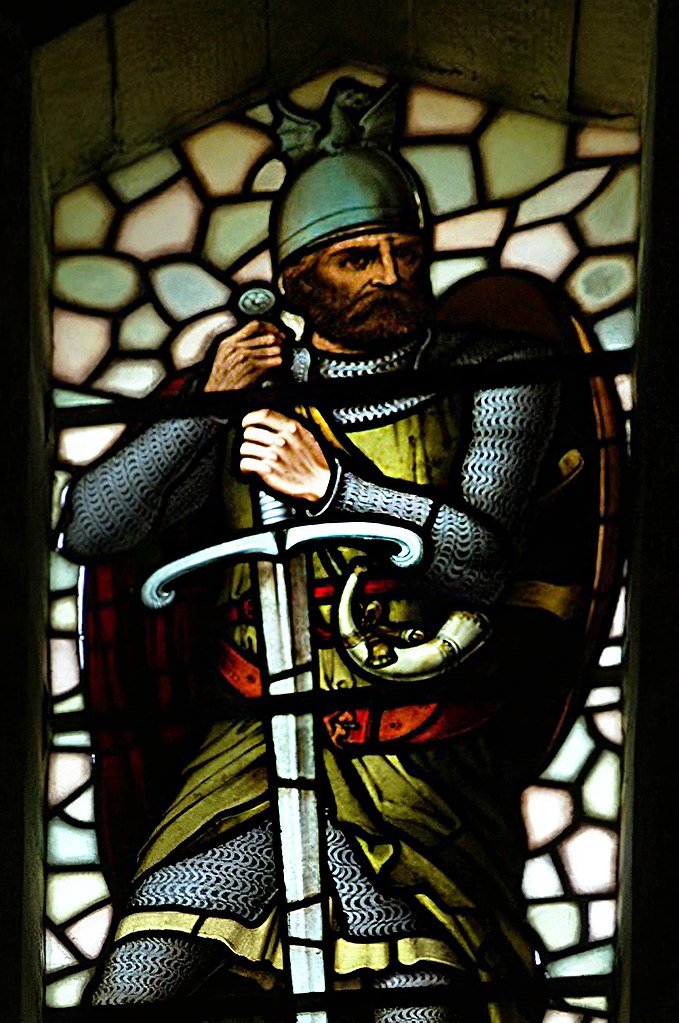
Stained glass window depicting WIlliam Wallace at the Wallace Monument, Stirling, Scotland via Otter / CC BY-SA (http://creativecommons.org/licenses/by-sa/3.0/)

One of the reasons we’re so divided is that we never agreed what kind of nation we should be: civic or ethnic. The Founders believed they were creating a civic nation: one based on reason and a social contract, by which free people chose to associate with each other.

But many people rejected that idea. They wanted an ethnic nation: one based not on reason but on faith, and not on a social contract but on loyalty to shared roots and culture. To them, a civic nation sounded soulless.

That split persists today, and it explains a lot about the durability of support for Trump, no matter what the facts say about his incompetence and corruption.

Ethnic nationalism frequently overlaps with racism, but the two aren’t identical. And discussions of ethnic nationalism often stop at racism, because racism looms so large and is so highly charged.

But as important as racism is, it’s not the whole story about ethnic nationalism, in which race and culture are intertwined. Sometimes ethnic nationalism is about race. Sometimes it’s about culture. And sometimes it’s about both.

To opponents of President Trump, including me, it looks obvious that he’s a racist. Some of his supporters think he’s a racist, too, and like that about him. But others think the racism charge is an unfair attack on someone who’s just trying to defend their culture. They’d say you don’t have to hate other cultures to love your own.

In the ethnic nationalist worldview, a nation is more than a lifeless contract, and faith and loyalty are more important than cold facts and logic. In fact all of us see things that way at least sometimes: when we’re inspired by stories of faith in, and loyalty to, legendary leaders like King Arthur, William Wallace (“Braveheart”), Luke Skywalker, or The Black Panther/King T’Challa.

Within the ethnic nationalist worldview, once you’ve sworn loyalty to your leader, it should be an unbreakable bond, but civic nationalists appear to be loyal to nothing. To civic nationalists, rational skepticism about leaders is a democratic virtue, but to ethnic nationalists, it looks like disloyalty or even treason.

It’s the same with civic nationalists’ commitment to progress: to them, progress looks self-evidently good. But to ethnic nationalists, people who are so willing to change, and to abandon tradition, can’t be trusted from one day to the next.

So it is with loyalty to Trump. Since his followers are committed to him, rational arguments are unlikely to change their minds — and may make their commitment even stronger. Ethnic nationalism is descended from the tradition of the divine right of kings, and the language of that tradition is used to describe Trump: a leader chosen by God.

So challenging loyalty to Trump with facts and logic, no matter how compelling they may be, is something like walking into the middle of a religious service and shouting, “But there’s no evidence any of this is true!” It isn’t likely to be persuasive. To the faithful, there’s a higher form of truth.

So how to campaign against Trump? Don’t argue with his followers. Show them he isn’t worthy of their devotion.

If loyalty to the man trumps trust in reason, expose the man for what he is.

Medieval soldiers swore to follow their king to the death — unless on the battlefield they discovered that he had no idea what he was doing and that he ran at the first sign of danger.

That’s Trump. Don’t try to show why he’s wrong. Show what he is.

(I develop these ideas and others in my book Patriots of Two Nations.)

Stained glass window depicting WIlliam Wallace at the Wallace Monument, Stirling, Scotland, via Otter / CC BY-SA.

Filed Under: Communication, Leadership & Management, Politics & Society Tagged With: Donald Trump, election 2020

Patriots of Two Nations: Why Trump Was Inevitable & What Happens Next

April 28, 2020 by Spencer Critchley

Patriots of Two Nations by Spencer Critchley

I have a new book! After thinking hard about Trump and the state of our democracy for the past 4 years, I think I understand what happened: this has been coming since the founding. America is two nations, occupying the same land but seeing everything very differently — even including truth itself.

If you oppose Trump and can’t understand people who support him, I think this book may help.

If you back Trump and believe you have good reasons for that, I hope you’ll find your worldview presented with respect.

There’s no support for Trump himself in this book, apart from compassion for what his childhood must have been like. But there’s a deeper explanation for his rise than you may have seen yet, one that goes beyond the anger and blame we hear every day.

I hope you’ll check it out! It’s available now at Amazon.com. I’d love to hear any thoughts you have.

Filed Under: Politics & Society Tagged With: Counter-Enlightenment, democracy, Donald Trump, Enlightenment, history, partisanship

  • « Go to Previous Page
  • Page 1
  • Interim pages omitted …
  • Page 10
  • Page 11
  • Page 12
  • Page 13
  • Page 14
  • Interim pages omitted …
  • Page 34
  • Go to Next Page »

Primary Sidebar

Search This Site

Broadcast Appearances

Spencer Critchley on Spectrum News 1 LA

Book

Patriots of Two Nations by Spencer Critchley
Kindle & paperback at Amazon. Audio book at Audible. EPUB format here.

New Music: Jailbreak

Cover image for the song "Jailbreak:" a ruined motel by the side of a lonely desert road.

Podcast

Dastardly Cleverness in the Service of Good

Social Media

Substack

YouTube

Music: The Critchleys

The Critchleys: Owen and Spencer Critchley

About Me

Spencer Critchley

Jump to Recent Posts

New Music: The Desert Mothers

The True Crisis

Outside in the Rain

The Liberal Backbone

Slowly and then all at once

On the Podcast: A Letter to a Friend Voting for Trump

“The War of the Worldviews” at TedX Pugwash

Recent Comments

  • terry rankin on “The War of the Worldviews” at TedX Pugwash
  • Spencer Critchley on Why Biden was right to link MAGA, the Confederacy & the Axis in his SOTU address
  • Spencer Critchley on Why Biden was right to link MAGA, the Confederacy & the Axis in his SOTU address
  • Scott Sexton on Why Biden was right to link MAGA, the Confederacy & the Axis in his SOTU address
  • Anonymous on Why Biden was right to link MAGA, the Confederacy & the Axis in his SOTU address

Photos

Spencer Critchley on Fox News' Cavuto
Barack Obama photo by Spencer Critchley
Bruce Springsteen photo by Spencer Critchley
Jay-Z photo by Spencer Critchley
Tiny American flag in crowd at political rally
Director Elizabeth Thompson & Composer/Audio Producer Spencer Critchley with the Emmy for the PBS documentary "Blink."

Find more photos here.

Privacy Policy

Learn how this site collects information and how you can control that.

© 2005–2026 Spencer Critchley