• Skip to primary navigation
  • Skip to main content
  • Skip to primary sidebar

Spencer Critchley

  • Home
  • About
  • Media Appearances
    • Broadcast Appearances
    • Print & Web Coverage
    • My Reporting & Commentary
    • Podcast
    • “Saving Democracy” Events
    • News: Real or Fake?
    • Hallmarks of a #BadArgument
  • Music
  • Photos
  • Subscribe
  • Contact

Journalism

How TV Has Changed Us: Barr Didn’t Need to Make an Argument, Just a Video Clip

April 19, 2019 by Spencer Critchley

What we saw from Barr yesterday was a deeply cynical exploitation of how television has changed us. Barr wasn’t trying to make an argument — he knew he didn’t have to. Instead, he was just trying to make a video clip. 

I doubt if he was worried about anyone exposing the hollowness of his repeated assertions of “No collusion,” echoing those of his client. He had to know discovery was waiting within minutes of anyone reading the document he was about to release. But he could count on most of us not reading.

Instead, we consume video clips, which don’t even open a case before closing it. They sidestep thought altogether and function like incantations: “This is true because it becomes true when we say it.”

So the point of Barr’s appearance was only in the appearance itself, how he looked and sounded: the blandly reassuring mask of the bureaucrat, the measured rhythm and downward cadences, the podium, the suit, and the suits behind him.

The only flaw: one of those other suits, Rosenstein. We couldn’t know what was going through his mind, but we couldn’t escape how he looked: like someone staring into a mirror and discovering nothing there.
Filed Under: Communication, Journalism, Politics & Society Tagged With: Donald Trump, media, Mueller Report, television, william barr

How Kellyanne Conway Won Her Debate With CNN’s Brian Stelter — Despite Being Wrong About Everything

July 24, 2017 by Spencer Critchley

[Also published at Huffington Post.] White House counselor Kellyanne Conway and “Reliable Sources” host Brian Stelter had a widely anticipated debate Sunday about the fairness of media coverage of the Trump administration. On every point that came up, Stelter exposed Conway as, at best, misleading.

And yet to some viewers, she was the clear winner.

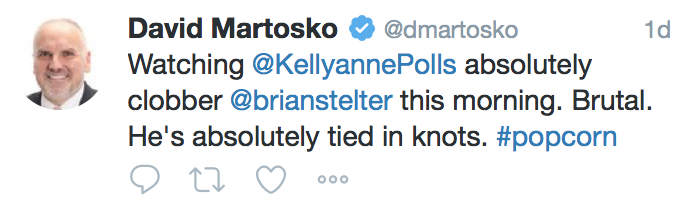
Tweet by David Martosko: "Watching @KellyAnnPolls absolutely clobber @BrianStelter this morning. Brutal. He's absolutely tied in knots."

How? Stelter and Conway were playing entirely different games.

For Conway, the audience was President Trump and the 36 percent of Americans who still trust him. Speaking past Stelter and connecting with them, she followed the rules of a game defined back in the 60s by the media consultants of the 1968 Nixon for President campaign.

One of them was the eventual founder of Fox News, Roger Ailes. Here’s Ailes in 1970, explaining why Nixon was seen to have lost his 1960 TV debate with John F. Kennedy despite many people believing he had won on the merits:

I think that the lighting was bad. It was experimental at best and sloppily done. His makeup was bad. I think he was tired–and this may have shown in his reaction and response.

I think that before the debates, John Kennedy spent the entire day briefing himself and relaxing, concentrating on the TV encounter.

Mr. Nixon did not do that. He walked in and handled it as if it were any other telecast.

Mr. Nixon, in a sense, stuck to the old school of debating, looking at Mr. Kennedy. But Mr. Kennedy looked at the camera, because he was essentially talking not to his opponent but to the people at home, and he was able to establish a kind of communication between himself and the home viewer. [Emphasis added.]

Ailes, along with other media and advertising experts, coached Nixon to be far more effective on TV for his winning 1968 campaign, and during his time in the White House.

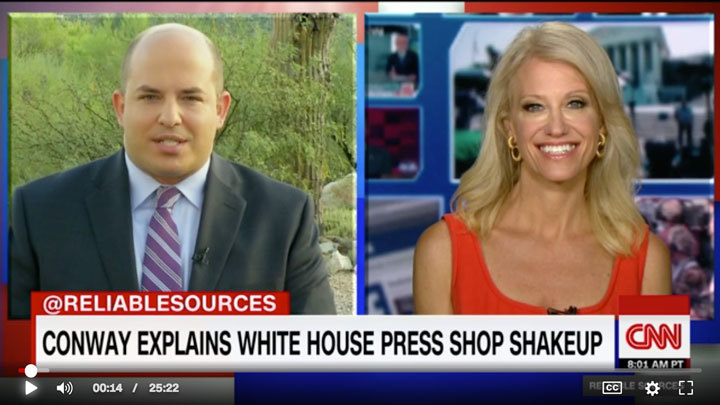
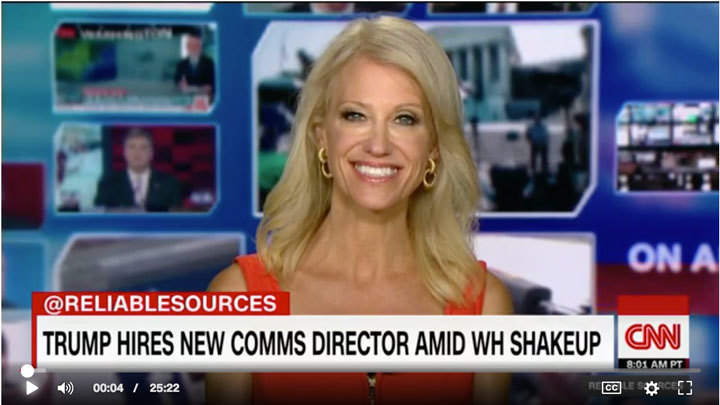
The rules they defined still apply, as you can see by analyzing the video of the Stelter-Conway interview. Let’s start with the splash frame from CNN.com:

Kelly Ann Conway on CNN

Conway looks happy, relaxed, and confident, is well lit by studio lighting, and is wearing red, a power color.

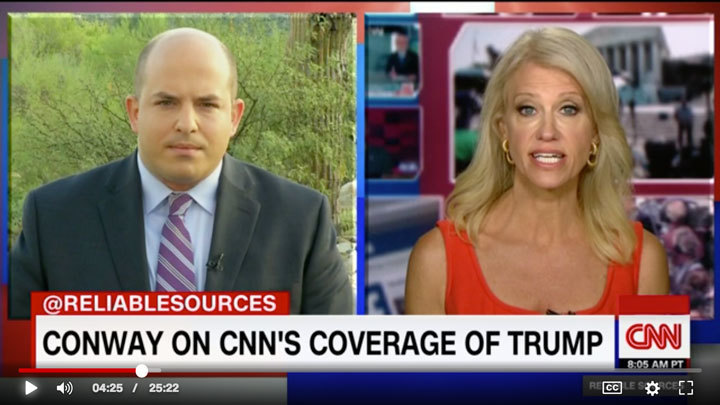
Now let’s look at her in split screen with Stelter:

Brian Stelter & Kelly Ann Conway on CNN

Oh oh. Just seconds in, and Stelter’s losing already.

How do we know? Let’s count the ways.

  1. Kelly is being shot straight on, so she can make direct eye contact through the camera with the viewer. Meanwhile Stelter is being shot from slightly above, so he has to look up. This unavoidably signals submissiveness, no matter what he’s saying. Our brains can’t help but make the unconscious connection: small, less powerful people look up at bigger, more powerful people.
  2. Stelter isn’t as well lit. Compared to Conway, he looks washed out. She, meanwhile, is being sculpted by highlights and eyelights.
  3. He’s wearing more muted colors, dominated by grey.
  4. He appears to be outside, in some random grassy environment (he was in Tucson, on the first day of a family vacation, according to his Twitter feed.) It feels like he’s both literally and symbolically on the outside, while she’s on the inside, in the impressive environment of a CNN studio.
  5. As you play the video, you’ll hear that his sound is weaker as well — and occasional bird tweets don’t help.

And so it goes throughout the interview. As Stelter tries to pin Conway down on one misdirection after another, she just moves blithely on to the next. And each of his sallies feels, I’m sorry to say, “low energy.” At pains to preserve the standards of civil discourse, he repeatedly reassures her of his respect, while she turns her responses into digs at him and CNN.

One example among many:

Stelter: “The scandals are about the president’s lies. About voter fraud, about wire-tapping, his repeated lies about those issues. That’s the scandal.”

Conway: “He doesn’t think he’s lying about those issues.”

It’s OK because he doesn’t think he’s lying? On the page, Conway’s response is ridiculous. But on TV, she looks and sounds unruffled and in control.

Stelter, on the other hand, comes across as alternately tentative, frustrated, and confused:

Brian Stelter & Kelly Ann Conway on CNN

On TV, impressions are what matter much more than words — as Conway’s boss could tell you, you win by looking like you’re winning.

CBS correspondent Lesley Stahl has often told the story of how she learned this lesson from a Reagan administration official back in 1984. Here’s how she related it to Bill Moyers in a 1989 interview:

I did a piece that was-where I was quite negative, to be honest with you, about Reagan. And yet the pictures were terrific, and I thought they’d be mad at me, but they weren’t. They loved it. And the official outright said to me, “They didn’t hear you. Didn’t hear what you said. They only saw those pictures.” And what he really meant was it’s the visual impact that overrides the verbal.

And that’s what happened, yet again, here.

Filed Under: Communication, Journalism, Politics & Society Tagged With: Donald Trump, journalism, media

A Prison Of Lies: How Misinformation Became a Multi-Billion Dollar Industry and Broke Democracy

March 12, 2017 by Spencer Critchley

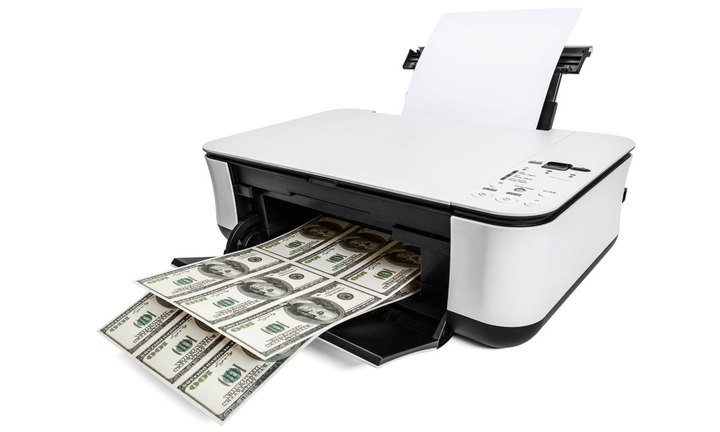
Desktop printer printing money
iStock

[Also published at Huffington Post.] Imagine if counterfeiting suddenly became legal. Say we asked people not to do it — but there would be no penalty if they did.

What would happen?

Simple: There would be an explosion of fake money. If people could buy things with currency worth nothing more than paper and some ink, many would, of course, do just that. Crooks would print up more and more counterfeit bills, which would start to take over from real money.

A venerable principle of economics explains why this happens. It’s named Gresham’s Law, after 16th century financier Sir Thomas Gresham.

The short version: Since sound money is expensive, and bad money is cheap, bad money proliferates and takes over the economy.

More recently, Gresham’s Law has been extended to information: Bad information drives out good, and for similar reasons.

In America in recent decades, an industry of information counterfeiters has sprung up, and it’s making a few, unprincipled people very rich, at the expense of everyone else.

And at the expense of democracy.

Bad money threatens the free market. But bad information threatens freedom itself. That’s because a vote is only as good as the information it’s based on. If your choices are based on illusions, what are they really worth?

Much of our population now votes, and makes other crucial decisions, based on bad information. Much of what they think they know about the world is untrue.

In effect, they live in a prison of lies, one whose walls they can’t even see.

When Everything You Know Is Wrong

  1. Our military is weak.
  2. Unemployment is rising.
  3. The stock market is falling.
  4. The deficit is exploding.
  5. Voter fraud is rampant.
  6. Crime is out of control.
  7. Many of the criminals are immigrants, flooding through our porous borders to rape and murder innocent Americans.
  8. Terrorists are coming the same way.

Given these terrifying facts, is it any wonder that Americans voted in 2016 for a candidate who promised to save us?

How could it have gone any other way? Hillary Clinton pledged to continue and build on the legacy of Barack Obama. How could any sensible person — any patriot — vote for that?

Except none of those “facts” was true. The voters who believed them were voting for and against illusions.

Think about what that means: the effect was the same as falsifying ballots. It’s just that the falsification happened before the vote instead of after.

Put another way, it’s like voters had a choice between door number 1 and door number 2, but for many of them, the numbers had been switched: door 1 was actually door 2, and vice versa.

Certainly there were people who voted for Donald Trump based on a more or less accurate picture of reality. But huge numbers — far more than were needed to swing the election — were just plain wrong about the issues on which they based their votes.

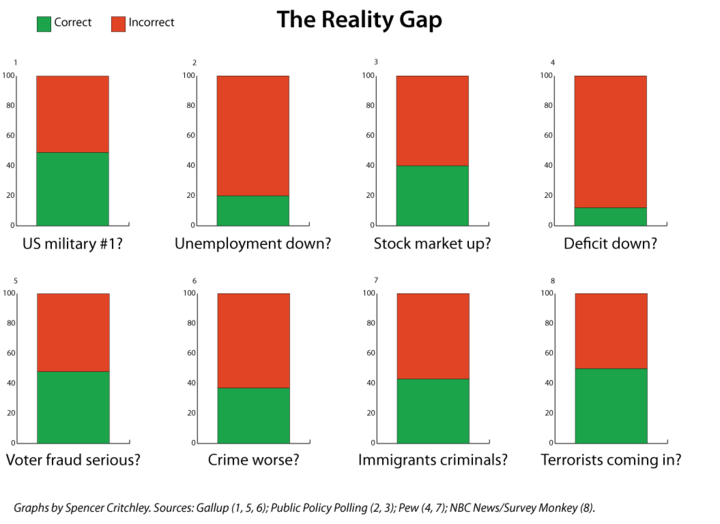
Let’s take another look at the “facts” these voters believed in.

  1. According to a February, 2016 Gallup poll, only 49 percent of Americans thought the United States was the world’s top military power. In fact, as of 2016, the military budget of the United States was almost as high as those of the next 14 highest-spending countries — added together. The U.S. accounted for one-third of all the military spending in the world.
  2. According to a December, 2016 Public Policy Polling survey, 67% of Trump voters believed unemployment had increased during the Obama administration, and only 20 percent thought it had decreased. In fact, it had been cut in half, falling from more than 10 percent to below five percent. Some would argue that unemployment was actually worse than it looked, because the standard unemployment measure, known as U-3, doesn’t take into account people who have given up looking for work or who are marginally employed, such as those who have been forced to take part-time jobs. But the measure that does take them into account, U-6, had also fallen dramatically, from just over 17 percent to just over nine percent.
  3. The same PPP poll found that 60 percent of Trump voters thought the stock market had gone down under Obama. In fact, the Dow Jones Industrial Average was almost two and a half times higher at the end of Obama’s two terms than it was at the beginning. From the end of the Bush era slide, on March 6, 2009, the Dow more than tripled.
  4. Although the deficit had already been cut nearly in half by 2013, only 29 percent of Americans believed it was going down, and only 12 percent of Republicans did, according to a Pew poll at the end of that year.
  5. As of August, 2016, 52 percent of Republicans believed voter fraud was a serious problem, according to a Gallup poll. In fact, no credible study has ever found anything but minuscule levels of voter fraud.

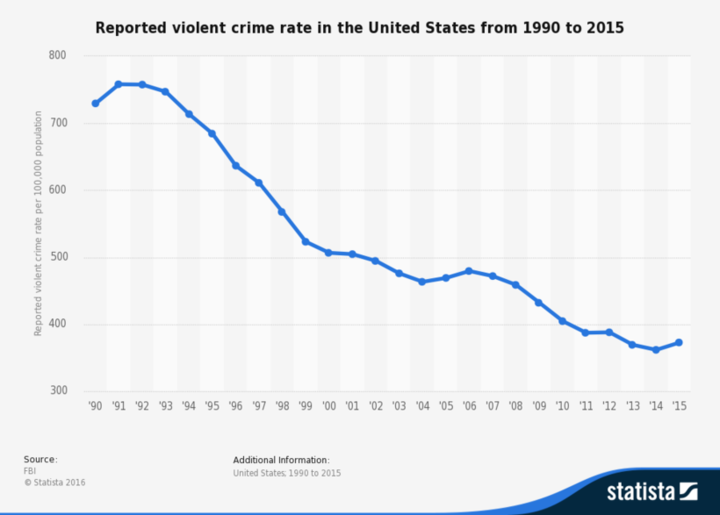
Graph of U.S. violent crime showing steep downward trend since 1990
Graph by Statistica based on FBI data

Imagine if counterfeiting suddenly became legal. Say we asked people not to do it — but there would be no penalty if they did.

What would happen?

Simple: There would be an explosion of fake money. If people could buy things with currency worth nothing more than paper and some ink, many would, of course, do just that. Crooks would print up more and more counterfeit bills, which would start to take over from real money.

A venerable principle of economics explains why this happens. It’s named Gresham’s Law, after 16th century financier Sir Thomas Gresham.

The short version: Since sound money is expensive, and bad money is cheap, bad money proliferates and takes over the economy.

More recently, Gresham’s Law has been extended to information: Bad information drives out good, and for similar reasons.

In America in recent decades, an industry of information counterfeiters has sprung up, and it’s making a few, unprincipled people very rich, at the expense of everyone else.

And at the expense of democracy.

Bad money threatens the free market. But bad information threatens freedom itself. That’s because a vote is only as good as the information it’s based on. If your choices are based on illusions, what are they really worth?

Much of our population now votes, and makes other crucial decisions, based on bad information. Much of what they think they know about the world is untrue.

In effect, they live in a prison of lies, one whose walls they can’t even see.

When Everything You Know Is Wrong

  1. Our military is weak.
  2. Unemployment is rising.
  3. The stock market is falling.
  4. The deficit is exploding.
  5. Voter fraud is rampant.
  6. Crime is out of control.
  7. Many of the criminals are immigrants, flooding through our porous borders to rape and murder innocent Americans.
  8. Terrorists are coming the same way.

Given these terrifying facts, is it any wonder that Americans voted in 2016 for a candidate who promised to save us?

How could it have gone any other way? Hillary Clinton pledged to continue and build on the legacy of Barack Obama. How could any sensible person — any patriot — vote for that?

Except none of those “facts” was true. The voters who believed them were voting for and against illusions.

Think about what that means: the effect was the same as falsifying ballots. It’s just that the falsification happened before the vote instead of after.

Put another way, it’s like voters had a choice between door number 1 and door number 2, but for many of them, the numbers had been switched: door 1 was actually door 2, and vice versa.

Certainly there were people who voted for Donald Trump based on a more or less accurate picture of reality. But huge numbers — far more than were needed to swing the election — were just plain wrong about the issues on which they based their votes.

Let’s take another look at the “facts” these voters believed in.

  1. According to a February, 2016 Gallup poll, only 49 percent of Americans thought the United States was the world’s top military power. In fact, as of 2016, the military budget of the United States was almost as high as those of the next 14 highest-spending countries — added together. The U.S. accounted for one-third of all the military spending in the world.
  2. According to a December, 2016 Public Policy Polling survey, 67% of Trump voters believed unemployment had increased during the Obama administration, and only 20 percent thought it had decreased. In fact, it had been cut in half, falling from more than 10 percent to below five percent. Some would argue that unemployment was actually worse than it looked, because the standard unemployment measure, known as U-3, doesn’t take into account people who have given up looking for work or who are marginally employed, such as those who have been forced to take part-time jobs. But the measure that does take them into account, U-6, had also fallen dramatically, from just over 17 percent to just over nine percent.
  3. The same PPP poll found that 60 percent of Trump voters thought the stock market had gone down under Obama. In fact, the Dow Jones Industrial Average was almost two and a half times higher at the end of Obama’s two terms than it was at the beginning. From the end of the Bush era slide, on March 6, 2009, the Dow more than tripled.
  4. Although the deficit had already been cut nearly in half by 2013, only 29 percent of Americans believed it was going down, and only 12 percent of Republicans did, according to a Pew poll at the end of that year.
  5. As of August, 2016, 52 percent of Republicans believed voter fraud was a serious problem, according to a Gallup poll. In fact, no credible study has ever found anything but minuscule levels of voter fraud.

Graphs showing the difference between popular beliefs and correct facts on a range of topics
Graphs by the author based on sources noted

These are just some examples from the alt reality many Americans now inhabit. Among other false but popular beliefs that influenced voters in the 2016 election: Obama was a Kenyan born Muslim who was going to take away all our guns, FEMA planned concentration camps for conservatives, the U.S. military was going to invade Texas, and Hillary was the leader of a sex slavery ring run out of a Washington, D.C. pizza restaurant.

Since the election, most explanations of how Trump won it have focused on factors that might have accounted for, at most, a few percentage points each in state-by-state vote totals: interference by Russia and Wikileaks, Hillary’s emails and/or the media’s obsession with them, mistakes by Hillary’s campaign, disruptive comments by FBI Director James Comey, or the Democratic Party being too far right, too far left, or too disconnected from the white working class.

Some or all of these likely had an influence. But remember, Hillary lost by less than 78,000 votes [update: this replaces the earlier estimate of several hundred thousand votes with the final result] in three battleground states, while winning the popular vote overall.

Whatever the causes, her defeat was razor thin.

Now look again at the percentages in my eight examples: all the margins are in the tens of percentage points, and many represent strong majorities of the relevant voters.

That means that any of the most popular explanations for the election result shrinks to insignificance when compared with this one:

The misinformation industry threw our election.

How Lying Became a Multi-Billion Dollar Business

Believe it or not, there was a time when self-described journalists wouldn’t have been allowed to just make stuff up all day long without presenting opposing viewpoints. That time was before 1987, when the federal Fairness Doctrine was eliminated.

The Fairness Doctrine was a policy of the Federal Communications Commission (FCC) adopted in 1949. It required broadcasters both to present important and controversial topics, and provide time for opposing viewpoints.

It was based on the idea that the public owned the airwaves. Broadcasters had licenses to use this public property, but not to abuse its owners by misleading them.

But that rule went away in 1987, as part of deregulation under the Reagan administration. Conservatives thought the Fairness Doctrine impinged on free speech, and that free market competition would take care of fairness.

Unfortunately, the effect was like removing all guarantees behind a currency.

Peddlers of information were now free to sell fiction as fact, like counterfeiters printing their own money. And just like counterfeit money, misinformation is really cheap to produce, and has a huge market.

Emotion sells. If you’re not required to tell the truth, you can just make up addictively provocative stuff, all day long. And since you don’t need to put any time or money into actual reporting or fact-checking, it costs you next to nothing to churn it out and rack up the revenues.

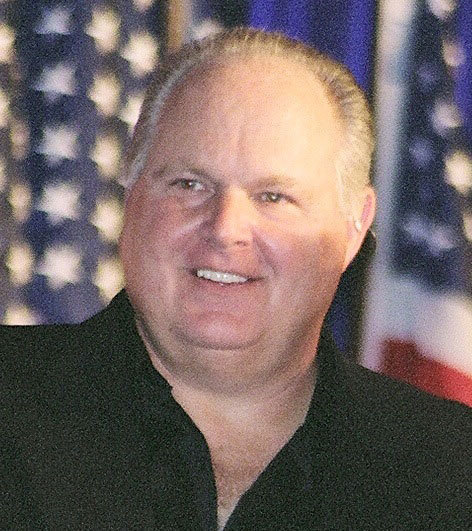
And what do you know, after 1987 right wing talk became the top commercial talk radio format in the U.S. Further deregulation made the format particularly lucrative, by allowing the formation of conglomerates like Clear Channel. They could afford to pay big syndication fees to the most popular hosts, led for many years by Rush Limbaugh, who got very rich by making his listeners very angry. Not surprisingly, Rush inspired imitators: Glenn Beck, Sean Hannity, Alex Jones, Michael Savage, Mark Levin, and many more.

Rush Limbaugh
Rush Limbaugh photo by Icolas Shayko (Creative Commons via Wikimedia)

TV’s turn had to wait for the arrival of digital cable and satellite technologies, which brought a proliferation of channels, along with the need to fill them with content. That enabled Rupert Murdoch’s 1996 creation of Fox News, which quickly began its rise to number one among basic cable channels.

As with right wing talk radio, Fox isn’t really in the news business, but a news-like form of the entertainment business. Despite its (possibly deliberately) ironic slogan of “Fair and Balanced,” what Fox sells is sensation, with objective information playing a distinctly secondary role.

There are legitimate reporters at Fox. But the network’s cash cows are the heavily biased, highly provocative opinion shows, like Fox and Friends, Hannity, and the industry-leading O’Reilly Factor.

New technologies also enabled the right-wing web. The introduction of the graphical Mosaic browser in 1993, followed by easy site-building tools and the rise of cheap bandwidth, meant almost anyone could be a publisher. Soon enough, that came to include hot button-pushing “news” sites, from the Drudge Report, to InfoWars, to WorldNet Daily, to Breitbart, to who knows how many more.

There was money in all of it — a lot of money.

In 2016, Forbes magazine ranked Rush Limbaugh the world’s 10th highest-paid celebrity, with an estimated income of $79 million. His net worth is variously estimated at between $350 million and $500 million.

Fox News’ 2015 revenue was projected at $2.3 billion, and the 2016 number will no doubt turn out to have been even higher, given that Fox broke ratings records on the back of the most attention-grabbing election campaign ever. Forbes estimates the net worth of Rupert Murdoch, who also owns other major media properties, at $13 billion.

In 2012, Business Insider’s Henry Blodget estimated that the Drudge Report was earning $50,000 a day, and that founder Matt Drudge must be worth hundreds of millions of dollars. Blodget made this startling comparison:

In short, the Drudge Report is almost as big a digital media property as The New York Times.

That’s absolutely staggering.

Why?

Because The New York Times is produced by ~1,200 journalists. The Drudge Report is produced by one.

Blodget is exaggerating a bit here: earlier in his article he estimates the total Drudge staff at “maybe three.”

Filed Under: Communication, Journalism, Politics & Society Tagged With: right wing media

Here’s the Scam That Makes Conservatives Believe the Mainstream Media Is Lying

February 28, 2017 by Spencer Critchley

[Also published at Huffington Post.] 

Recently a Facebook friend shared this outrage-inducing headline: BREAKING: Massive Illegal Immigrant Welfare Fraud Discovered.

My first reaction was, “Obviously fake news.” The source was something called WorldNewsPolitics.com, a website with no masthead, no physical address, and a name that doesn’t quite make sense.

But I took the trouble to check the story out, and I discovered that in fact it was more insidious than fake news: it’s an extremely misleading report of something that actually happened.

It’s a scam, built on just the barest amount of accuracy needed to survive a quick click-through. The goal is to fool the unwary into believing “This is truth the mainstream media is trying to keep from me.”

Here’s how it works, step by step.

  1. If you go to the “Immigrant Welfare Fraud” story, you’ll find it begins with this:

The Washington Free Beacon is reporting a breaking story that will have every American taxpayer furious. The Social Security Administration conducted a routine audit and discovered it paid $1 billion in benefits to individuals who did not have a Social Security Number (SSN).

Sounds outrageous, right? Why haven’t you heard of this in the mainstream media — are they trying to hide it? If you do a web search, what do you know? You get pages and pages of results — but only on right-wing sites.

Here’s an excerpt from what I found on Google:

Welfare fraud Google results
Google search results

Proof! Only the right-wing media tells you the truth, while the lying MSM covers it up!

Except…

  1. As you can see from the WordNewsPolitics story’s first few words, it’s actually a rewrite of an item from the Washington Free Beacon, a slightly more respectable publication — for example, you can find out who the Beacon’s editors and writers are. If you go to the Beacon’s story, you’ll discover that it’s a little less inflammatory, though still dramatic:

Feds Paid $1 Billion in Social Security Benefits to Individuals Without a SSN

Based on the Beacon’s headline, we don’t know, despite what WorldNewsPolitics asserts, that these individuals were illegal immigrants, and we don’t know they committed welfare fraud. We’re only told that the federal government paid social security benefits to some people who didn’t have social security numbers. And in fact if we read the story, we find that we don’t even know that. All we know is that the numbers weren’t on file.

  1. From the Beacon story, we can click a link to the original source of the information: the Social Security Administration itself, which recently released an audit of its own practices. That audit found that not $1 billion but about $853 million (which the Beacon rounds up to $1 billion) was paid out to people “who do not have a social security number in the Social Security Administration’s payment records.” And it was paid out not all at once but over a period of 12 years, between 2004 and 2016.
  2. Still, $853 million sounds like a lot of money. But how much is it in context?

Well, I did the math, using figures from ssa.gov for the years in question (see below*). Hundreds of billions of dollars in social security benefits are paid out every year. If $853 million of them may have been misdirected — and that is not clear, since all we know is that the SSNs weren’t on file — it would amount to an error rate of less than 1/100 of one percent.

Of course it would be better to have no errors at all. But given how unlikely it is that any massive system will ever have an error rate of zero, 1/100 of one percent doesn’t seem quite so bad.

5. Now let’s ask ourselves how we know about all this. Is it the result of hard-hitting investigative work by the right-wing media?

No, we know because the government audited itself and transparently reported the results. This is what we want to see the government doing — searching for waste and trying to eliminate it.

We’re a long way from “Massive Illegal Immigrant Welfare Fraud,” aren’t we?

6. But wait, there’s more. Misleading stories like this one appear daily, and spread almost instantaneously, with very similar versions showing up all over the right wing media.

That’s no accident. There’s a system in place for making it happen, like sending marching orders to a waiting army.

To see how that works, let’s look in detail at the link to the Washington Free Beacon story that we found in the WorldNewsPolitics story:

http://freebeacon.com/issues/feds-paid-1-billion-social-security-benefits-individuals-without-ssn/?utm_source=Freedom+Mail&utm_campaign=f181a5137d-EMAIL_CAMPAIGN_2017_02_21&utm_medium=email&utm_term=0_b5e6e0e9ea-f181a5137d-46179017

In particular, notice the part of the url beginning with this:

?utm_source=Freedom+Mail

This is what’s known as a campaign tag. It and other tags that follow it tell us that the source of this link was an email campaign from “Freedom Mail.” I’m guessing that refers to this conservative email list, identified in 2010 by Ben Smith of Politico:

…a secret (which strikes me as misguided, but harmless) list of center-right foreign policy writers and thinkers called Freedom Mail.

Whether or not this actually is the same Freedom Mail as the one behind the “illegal immigrant welfare fraud” campaign, the mechanism is the same across multiple interest groups and their email lists. Operatives comb the news each day for stories they can exaggerate, distort, and blast out to eager media outlets who are more interested in ideology than truth.

The supposed immigrant crime wave in Sweden? Congressional town hall protesters supposedly being paid?

Products of the same system.

It’s the system that gives right-wing media consumers much of their “news” every day. It explains why their angry social media posts and forum comments tend to contain the same talking points, and why those comments are so badly misinformed.

Illustration showing how false news spreads
Illustration by the author

This is not to say there’s no one on the left pushing stories, many of which are also biased, though all such activity on the left is dwarfed by what’s happening on the right.

But legitimate journalists won’t report anything just because it shows up in an email from an advocacy group. The mainstream media checks facts — that’s what “mainstream” means.

The trouble is there’s a whole industry of right-wing media outlets, ranging from biased to outright fake, who are quite happy to give the fact-checking a pass.

And now you know why right-wingers keep seeing stories in right-wing media that they don’t find in the mainstream media.

It isn’t because the MSM is trying hide the truth.

It’s because those stories are crap.

And the people who believe them? They’re being played for suckers.

___________________

* Using figures from the Social Security Administration’s annual Fast Facts reports:

Total payments, 2004 – 2016: $9,100,155,400,000

Possibly misdirected payments: $853,000,000

Possibly misdirected payments, percentage: .0094%

Filed Under: Communication, Journalism, Politics & Society Tagged With: fake news

7 Tips for Telling Real News from Fake

February 16, 2017 by Spencer Critchley

I’ve been hearing a lot lately from people who feel overwhelmed by all the drastically different news narratives fighting for their attention — especially, of course, the ones about Donald Trump.

Photo of people in a waiting room reading various news sources.
Photo: iStock

Real news? Fake news? How do you tell the difference?

Here’s a seven-point checklist of the most essential things to know.

1. Be skeptical. There’s an old saying in journalism: “If your mother says she loves you, check it out.” Reporters are supposed to look hard at what they think they know, and so should their audience. Reputable news outlets “show their work,” so you can see how they came to their conclusions. Are the sources solid? Does the logic makes sense? (More on this below.)

2. If the story is sensational, be more skeptical. Amazing things are amazing for a reason: they don’t happen very often. There are a lot more amazing stories in the world — because they make money — than there are amazing things that actually happened. This is why serious news sources tend to be less exciting to read than tabloids are. Memorize or bookmark these fact-checking sites:

  • Politifact.com
  • Washington Post Factchecker
  • Snopes.com

3. If the story reinforces what you already believe, be more skeptical. We all suffer from confirmation bias, the tendency to accept information that supports our beliefs, and ignore or reject information that doesn’t. If you want accurate information instead of just flattery, you’re going to have to fight your own confirmation bias. And please, don’t fall into the trap of assuming that all news you don’t like is “fake.” (More on this below, too.)

4. Check the sources. The sources of a story are like the foundation of a building: if they’re not solid, the whole thing is likely to collapse. Sources should be objective and as close to the original information as possible. So, for example, a respected, independent scientific research organization is more credible than a partisan think tank, and still more credible than a random person with an opinion.

There should be more than one source, unless the story is an interview or there is something exceptional about what this source has to say. Here’s part of the Reuters guidelines on sources, which are typical of those used by all credible news outlets:

You must source every statement in every story unless it is an established fact or is information clearly in the public domain, such as court documents or in instances when the reporter, photographer or camera operator was on the scene.

Adherence to this standard is the reason credible reporters don’t just assert things, like “Unemployment is down.” Instead, they’ll write “Unemployment has fallen to 4.7 percent, according to the U.S. Bureau of Labor Statistics.”

Beware of attempts to fool you with sources that look credible, but aren’t. These include organizations that appear to be government agencies, respected research institutions, or major news organizations, but aren’t. Look them up. While even the best sources can make mistakes, there’s usually a good reason for a good reputation.

5. Check the logic. Not only should the facts of the story be solid, so should the way they’re connected. Let’s say you hear that a person wearing sneakers has robbed a bank. Does this mean all sneaker-wearers are probably bank robbers? Of course not.

If a scientific study found that many bank robbers do wear sneakers, then we’d at least know there’s a correlation of some kind. But we still wouldn’t know that wearing sneakers means someone is likely to be a crook. It could just be that robbers like to be able to run fast. All of this would need to be checked out.

It may be easy to see the problem with jumping to conclusions about sneaker wearers, but this kind of illogic is common in less-than-credible news outlets, and often goes unchallenged by consumers. For example, because some immigrants commit crimes, many people conclude that immigrants are more dangerous, and some news outlets encourage that belief. But the logic doesn’t follow, and when we check the facts, we find that first generation immigrants commit less crime than native-born Americans do.

Now, here’s a test. Do you yourself believe that immigrants are less likely to commit crimes? Then please be aware that your own confirmation bias makes you more likely to accept what I just said, on faith. Please check — using credible, objective sources, not just the ones who always tell you what you want to hear — to see for yourself.

And the same if you still believe immigrants are more likely to be criminals: be aware that your confirmation bias makes you more likely to reject what I’m saying. Check for yourself — again, using credible, objective sources, not just the ones who always tell you what you want to hear.

6. Understand what you’re looking at. The difference between reliable and unreliable isn’t always black and white. There are different kinds of content that meet, or fail to meet, different kinds of standards:

Hard news. This is just the facts. For example: “A home on 13th St. suffered extensive damage last night after a 30-foot elm tree was blown over by 60 mph winds.”

Opinion. This may be an editorial, an op-ed (in newspapers, this is opinion that appears on the page opposite the editorial page), or a blog post. It’s not a problem if it’s biased — that’s what opinion means. Many good newspapers have a clear bias on their editorial pages, but give straight reporting on their news pages. Reputable opinion writers will base their arguments on verifiable facts, because opinion isn’t an excuse to make things up. You should feel confident that you can agree or disagree without worrying about being misled.

Feature story. This is softer, interpretive coverage of a story or people, exploring meaning and emotion. For example: “Frank Sinatra, holding a glass of bourbon in one hand and a cigarette in the other, stood in a dark corner of the bar between two attractive but fading blondes who sat waiting for him to say something.” That’s the opening sentence of one of the most famous feature stories of all, “Frank Sinatra Has a Cold,” by Gay Talese. Although a feature story is subjective, all facts it cites should be objectively true (unless it’s clear the writer is playing with the boundaries between fact and fiction, the way Hunter S. Thompson did, for example).

Biased, but still valid, news. Since reporters are humans, it’s impossible for any of them to be 100 percent bias free — even our story about the tree hitting the house showed more concern for the house than for the tree. But some outlets report hard news from a biased perspective. As long as they’re careful with facts and logic, such outlets can be worth consulting — especially if they challenge your own biases.

News that’s so biased it’s misleading. To support their in-house bias, some outlets twist facts and logic so much that they do more harm than good. This describes some other tabloids.

Fake news. Fake news is just made up from thin air.

7. Understand “Who benefits?” This is a technique, known by its Latin translation of cui bono, used by investigators. They find suspects by identifying who benefits from the crime.

It can help you decide whether news is real or fake.

Is the mainstream media fake news, the way we hear so often lately? No, and the charge is irresponsible, because it undermines the legitimacy of the free press, which is a foundation of democracy. What “mainstream” means is commitment to traditional standards of accuracy. Each mainstream outlet has strict ethical standards (for example, these) and will quickly discipline or fire reporters who violate them.

By far, most mainstream journalists, whatever their shortcomings, want to meet those standards. They got into the business in the first place because they wanted to discover the truth.

Even if you find that hard to believe (in my experience, it’s true), consider this: whatever their shortcomings may be, mainstream media companies benefit by getting the facts right, not wrong. Objectivity in journalism grew out of the business opportunity of selling content to all kinds of readers, conservative and liberal, many of whom make important decisions based on the accuracy of what they get from the mainstream news, and wouldn’t be happy to learn it was fake. Meanwhile, advertisers in mainstream media are there because they want to reach a large audience. They have no interest in seeing some of that audience turned off by partisan coverage.

Some less reputable media companies, though, make money a different way: by selling not facts, but sensation. They’re aiming to catch the attention of gullible people who are swayed by emotion, and they tend to attract advertisers who like that kind of customer.

Remember tip 2: If the story is sensational, be more skeptical.

So if you hear someone claim the mainstream media is fake, ask yourself, ”Who benefits from making me believe that?”

Answer: people who want to get away with stuff.

So who can you trust?

I won’t try to list all the credible news outlets, but here are a few of the most widely trusted: the Washington Post, the New York Times, the Wall Street Journal, the Associated Press, and Reuters. None is perfect, of course — remember: humans — but all are excellent. They originate much of the news you hear each day and they have enough skilled reporters to cover a wide range of topics in depth.

How do you know I’m steering you straight? You can now check for yourself — and I hope you will.

I’ll leave you with a thought from Thomas Jefferson, who, despite his own problems with the press, was one of its greatest champions:

No experiment can be more interesting than that we are now trying, and which we trust will end in establishing the fact, that man may be governed by reason and truth. Our first object should therefore be, to leave open to him all the avenues to truth. The most effectual hitherto found, is the freedom of the press. It is, therefore, the first shut up by those who fear the investigation of their actions. (Letter to Judge John Tyler Washington, June 28, 1804.)

This post was updated Oct.3, 2024: shortened list of factchecking sites, added more suggested news sources.

________________

Photo: iStock

Filed Under: Communication, Journalism, Politics & Society Tagged With: Donald Trump, fake news, journalism, news

  • « Go to Previous Page
  • Page 1
  • Page 2
  • Page 3
  • Page 4
  • Page 5
  • Go to Next Page »

Primary Sidebar

Search This Site

Broadcast Appearances

Spencer Critchley on Spectrum News 1 LA

Book

Patriots of Two Nations by Spencer Critchley
Kindle & paperback at Amazon. Audio book at Audible. EPUB format here.

New Music: Jailbreak

Cover image for the song "Jailbreak:" a ruined motel by the side of a lonely desert road.

Podcast

Dastardly Cleverness in the Service of Good

Social Media

Substack

YouTube

Music: The Critchleys

The Critchleys: Owen and Spencer Critchley

About Me

Spencer Critchley

Jump to Recent Posts

New Music: The Desert Mothers

The True Crisis

Outside in the Rain

The Liberal Backbone

Slowly and then all at once

On the Podcast: A Letter to a Friend Voting for Trump

“The War of the Worldviews” at TedX Pugwash

Recent Comments

  • terry rankin on “The War of the Worldviews” at TedX Pugwash
  • Spencer Critchley on Why Biden was right to link MAGA, the Confederacy & the Axis in his SOTU address
  • Spencer Critchley on Why Biden was right to link MAGA, the Confederacy & the Axis in his SOTU address
  • Scott Sexton on Why Biden was right to link MAGA, the Confederacy & the Axis in his SOTU address
  • Anonymous on Why Biden was right to link MAGA, the Confederacy & the Axis in his SOTU address

Photos

Spencer Critchley on Fox News' Cavuto
Barack Obama photo by Spencer Critchley
Bruce Springsteen photo by Spencer Critchley
Jay-Z photo by Spencer Critchley
Tiny American flag in crowd at political rally
Director Elizabeth Thompson & Composer/Audio Producer Spencer Critchley with the Emmy for the PBS documentary "Blink."

Find more photos here.

Privacy Policy

Learn how this site collects information and how you can control that.

© 2005–2026 Spencer Critchley