• Skip to primary navigation
  • Skip to main content
  • Skip to primary sidebar

Spencer Critchley

  • Home
  • About
  • Media Appearances
    • Broadcast Appearances
    • Print & Web Coverage
    • My Reporting & Commentary
    • Podcast
    • “Saving Democracy” Events
    • News: Real or Fake?
    • Hallmarks of a #BadArgument
  • Music
  • Photos
  • Subscribe
  • Contact

Spencer Critchley

It’s Not Only the Right That Attracts Authoritarians

January 26, 2020 by Spencer Critchley

Graph: Will you support another Democratic nominee?

There sure are a lot of absolutists in Bernie-world: according to a recent poll conducted by Emerson College, 47 percent of them won’t commit to voting for any other Democratic nominee.

But they’re not alone: a significant percentage (28) of all Democrats are equally obsessed with getting everything they want. To that end they would sacrifice the people they claim to serve to another four years of Trump.

Ideological purism doesn’t fully capture this. Maybe we need to accept that it’s not just the right that attracts the authoritarian personality type.

Because if you truly believe in the greater good, how hard can it be to commit to voting for any of the Democrats over Trump?

(Note that the Emerson poll has an overall margin of error of +/- 2.8%, but it will be larger for subsets of the sample, such as supporters of individual candidates.)


Filed Under: Politics & Society Tagged With: authoritarianism, Bernie Sanders, election 2020, intolerance

The Democrats’ Circular Firing Squad Is In Full Effect

January 20, 2020 by Spencer Critchley

There’s nothing we Democrats like better than a fight — with each other.

Even now, when we face a threat analogous to a giant asteroid hurtling towards Earth, our response is to form a circular firing squad.

As we see with the current Bernie-Elizabeth battle. It has hurt both of them while helping Trump, by providing new themes for his attack ads:

“Bernie Sanders hates women!”

“Elizabeth Warren loves fat cats!”

Neither of these charges — originating, remember, with Democrats — is remotely likely to be true. But what does Trump care?

Truth is for chumps, not Trumps.

Am I arguing that the Democratic primary candidates shouldn’t criticize each other? Of course not. The point of a primary is debate.

But attacking the character of a candidate from your own party is both destructive and strategically stupid:

  • The odds are, and never more so than now with such a crowded field, that you are not going to be the nominee. If you damage the person who is, you are hurting your side’s cause in the general election.
  • You’re damaging your own cause, too. If and when you eventually have to praise the candidate you’re now attacking, your personal brand will take on a heavy admixture of “just another political hack.” (Hi there, Lindsey Graham.)
  • And although the conventional wisdom says candidates must show their “toughness” like this, that advice comes from consultants who should have learned better after losing so many elections. Democrats have a natural electoral advantage against a Republican Party that mostly serves the rich by exploiting the anger of rural whites. And yet, going back to the 1960’s, Democrats have managed to lose more than they win.

Yes, toughness can be good. But it falls flat when there’s too much show in the showing. Then the attacker looks the opposite of tough: fearful, reactive, and led — by circumstances, staff, and polls — instead of leading.

That’s the impression left by Elizabeth Warren’s charge that Bernie told her a woman is unlikely to be elected President.

It’s also the impression left by Bernie supporters, with what looks like his tacit approval, when they claim that the formerly Republican Warren is secretly in the pocket of the plutocrats she now goes after.

Neither claim is credible, and both do more harm than good, to both candidates, to Democrats overall, and, in this election, to democracy itself, which is under attack by the worst president in history — the giant asteroid.

Lately, we hear there’s a truce between the Sanders and Warren factions. A hopeful sign?

Nope. The point of the truce appears to be to enable both camps to train their fire on moderates like Biden and Buttigieg — or Steyer, Bloomberg, Klobuchar, or Yang, if and when any of those surges in the polls.

Again, should there be a vigorous debate of policy? Yes, yes, yes. But to claim, for example, that Joe Biden is against Social Security, as we hear now from the Sanders campaign?

Destructive and strategically stupid.

In citing Sanders and Warren, I don’t mean to suggest that it’s only progressives who join the circular firing squad. In this primary, moderates like Kamala Harris, Eric Swalwell, and even the usually Buddha-like Cory Booker resorted to friendly fire, before dropping out of the race. In the 2008 primary, Hillary Clinton (whose 2016 campaign I did some work for), engaged in some shameful attacks on fellow moderate Barack Obama (both of whose campaigns I worked for).

If the circular firing squad had somehow produced a record of success, volunteering for it might make some sense. But ask Hillary, Kamala, Eric, Cory, and the rest how well it worked for them. Then compare the records of happier warriors like Ronald Reagan, Bill Clinton, Obama, and, in the current cycle, Biden, who have kept their eyes on the true prize.

Unlike with a real firing squad, no one is forced to serve on a political one. The candidates, and we their supporters, can simply decline the invitation to participate in mutually assured destruction.

Is it too much to ask?

UPDATE, Jan. 21, 2020: Just in the two days since this was posted we’ve seen two more volleys by the circular firing squad:

  • The Bernie Sanders campaign circulated an op-ed accusing Joe Biden of “corruption.” So if Biden becomes the nominee, as is entirely likely, the Trump campaign will be able to quote Bernie saying he’s corrupt. And Bernie (to be precise, his campaign) said it just before the impeachment trial, during which Trump will try to make the same claim. This was, as I argue above, destructive and strategically stupid. I’m glad to see Bernie has since apologized.
  • Hillary Clinton was quoted as saying “nobody likes” Bernie Sanders and that she couldn’t commit to endorsing him if he becomes the nominee. If he does, Trump will quote her saying Bernie “got nothing done” in Congress and that he’s “all baloney.” Hillary’s comments were destructive and stupid, too. I’m only sort of glad to see that Hillary has only sort of backpedaled.
Illustration of a circular firing squad aiming at the year 2020.

Filed Under: Politics & Society, Uncategorized Tagged With: 2020 election, Democratic Party

War With Iran: The Evil Done by Nobody

January 5, 2020 by Spencer Critchley

Qassim Suleimani photo from Wikimedia Commons
Qassim Suleimani (photo via Wikimedia Commons)

One overlooked aspect of the apparently impulsive and reckless decision to kill Qassim Suleimani: how evil is enabled by bureaucracy.

In this case, according to reporting, Trump’s advisers presented him with “bracketed options,” a common bureaucratic tactic. Bracketed options are designed to manipulate the recipient into choosing what the presenters want.

It’s a Goldilocks process: offer one choice that’s too far one way, another that’s too far the other way, and one in the middle that’s “just right.”

The trouble this time: these bureaucrats were dealing with Trump, who thinks at the level of an emotionally disturbed child. And he chose the most extreme option. He wasn’t supposed to, it was only there to nudge him towards another one, but he chose it.

It’s not that Suleimani didn’t have it coming. He was a brutal terrorist who could be targeted under the standards of just war, depending on the circumstances. But Trump appears to have risked chaos — death and suffering for untold numbers of people — with little more than a moment’s thought. If so, even if it somehow works out, this will still have been a grotesquely irresponsible decision.

“Top Pentagon officials were stunned,” according to the New York Times.

First of all, how could they possibly be stunned? Did they forget it was Donald Trump they were dealing with? An incredible lack of foresight for people we trust to plan wars.

But also, this was a typical example of bureaucratic dishonesty — one that happened to backfire terribly — found throughout government and in the private and nonprofit sectors too: anywhere that people are incentivized to diffuse accountability while their self-interest remains concentrated. Note that as stunned as Trump’s advisers were, none was too stunned to stick with the program — or lack of program, in this case.

Not every bureaucrat is dishonest, of course. Some are positively noble, like the courageous impeachment investigation witnesses who have risked their careers, and even their personal safety, in the service of truth and duty. And many just quietly and anonymously do their best.

But the incentives of bureaucracy encourage the ignoble. Stand up for the right thing and risk your livelihood? Or keep your head down and try to work the system?

Under these conditions, too often it’s the worst people who rise to the top: those who are the most skilled at pursuing their own interests while hiding them, behind a deliberately bland countenance.

This studied boringness can an asset, since it deflects attention from what’s really up. Attorney General William Barr is an exemplar. Watch any of his public defenses of the indefensible. Words, tone, body language: all say, “Nothing to see here.”

But we may not need a Barr. Evil can happen passively, just because it’s allowed to happen, just because no one is on the hook.

Either way, much of the evil done in our world has no apparent evil-doer. It seems to be born from the void, and so it is.

The void may be the absence of accountability, or it may be the void at the core of a deliberate schemer like the nihilistic Barr. When asked recently if he worries about the damage he’s done to his reputation, he answered, “Everyone dies.”

As Hannah Arendt says in “On Violence,” “The greater the bureaucratization of public life, the greater will be the attraction of violence… for the rule by Nobody is not no-rule, and where all are equally powerless we have a tyranny without a tyrant.”

Filed Under: Leadership & Management, Politics & Society Tagged With: bureaucracy, iran, qassim suleimani, trump, war

Understanding Congressional Republicans’ Lack of Shame

December 19, 2019 by Spencer Critchley

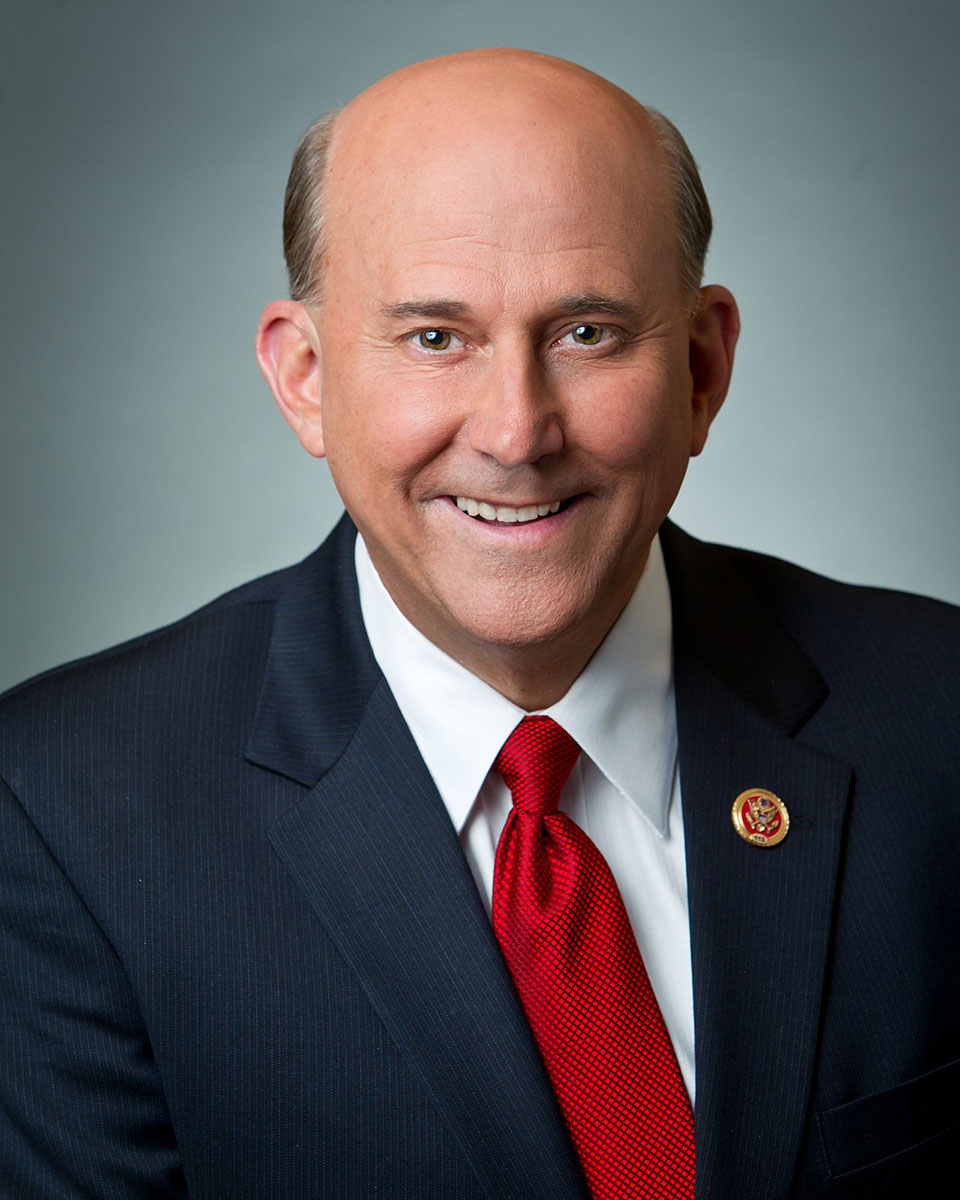
Congressman Louis Gohmert (R, Texas)
Defending Trump, Congressman Louie Gohmert (R-Texas) has identified the Ukraine whistleblower and repeated Russian propaganda. “He believes what he’s saying,” says a GOP operative.

To understand Congressional Republicans’ lack of shame — and even righteous pride — in defending an obvious crook, we can look at how a tribe works in a failed state: it would be wrong not to lie or cheat to help any member of your tribe, no matter how unworthy, just because they’re in the tribe — and without fail if they’re the leader. If, in your world, everyone is corrupt, then the tribe is your only protection, and loyalty is the paramount value.

How did the Republican Party achieve the status of a failed state? It was eaten by its own scam.

For decades, the GOP duped “rubes” into siding with the rich by spinning tales of the supposedly endless corruption of the government, the elites, and minorities. A hugely profitable industry sprang up to profit from reselling those stories in the guise of news, and made “real Americans” angrier and angrier.

As long as GOP leaders could control the messaging, they were able to ride this tiger. But they lost that control. Thanks to the Internet, the rubes were able to talk to each other and compare notes. They still believed the conspiracies they’d already been sold, but now they discovered their own side was screwing them too.

Triggered by the 2008 financial crash, they revolted, with the Tea Party. Then they took over, with Trump. In this brash, crass, regular guy who had succeeded (or so they believed) by beating a crooked system at its own game, they found the perfect expression of that revolt, and its perfect leader.

Filed Under: Uncategorized

The Left Has Its Own Intolerance Problem: Certainty

December 1, 2019 by Spencer Critchley

In writing this, I’m bracing to be called a Republican tool, or worse. And that’s the problem I want to address.

While resisting the egregious intolerance on the right, the left needs to face its own. Unlike the right’s, our version of intolerance doesn’t target minorities. Ours is aimed at those who disagree. 

You can see it in the response to Pete Buttigieg’s disagreement with the idea of free college for all — he thinks upper income people should still have to pay. Here’s AOC, who was cheered by many on Twitter over the weekend:

This is a GOP talking point used to dismantle public systems, & it’s sad to see a Dem candidate adopt it.

Let’s talk about why Republicans are wrong on this.

Just like rich kids can attend public school, they should be able to attend tuition-free public college.

Here’s why. https://t.co/pWprP0qrhG

— Alexandria Ocasio-Cortez (@AOC) November 29, 2019

The same “Republican talking point” accusation has been made by Elizabeth Warren in answer to primary rivals challenging her Medicare for All plan.

When Obamacare fell short of being Medicare for All, some on the left accused Obama (who had risked his presidency and lost the Congress) of selling out.

And we see the same tendency every time debate among fellow Democrats gets shut down with ad hominem attacks like “neoliberal,” “corporate shill,” and the like.

I’d ask those who are tempted to join in to set aside your own opinions for a moment — I’ll park mine below* — and reflect: Surely it’s possible for more than one solution to be offered thoughtfully and in good faith?

And surely liberals, as believers in reason, should welcome that?

Of course we are all free to criticize other positions, and vigorously. But why assume that those who hold those positions — even if we’re sure they’re wrong — are enemies?

I think I have an answer to that “why.” I discovered it in reflecting on some of my own previous certainties.

The belief in reason that I just mentioned is one of modern liberalism’s greatest strengths. While so many on the right have abandoned this Enlightenment legacy, liberals have held it fast. And because we’re still guided by testable facts and logic, we’re more likely both to abandon old prejudices and to be open to better policies — “Reality has a well-known liberal bias,” as Stephen Colbert put it.

But there is a potential weakness here as well: that of being too sure we’re right. 

That’s because certainty easily becomes intolerance: ”If you disagree with me, you’re just wrong.“

Furthermore, since certainty makes us prone to ignoring new information, it can lead to big mistakes.

A historic example of such a mistake may be at the root of the liberal version of intolerance. That was the Enlightenment-era theory that since science explained so much else, it could explain, and even predict, history.

Giambattista Vico
Giambattista Vico by Francesco Solimena, via Wikimedia Commons

It seemed nothing but reasonable when Giambattista Vico first proposed it in his Scienza Nuova. But, independently, the Jacobins of the French Revolution revealed the intolerance it contained: if some of us have scientifically determined the direction of history, but others disagree, it follows that these others can only be either ignorant or evil. They must accept education, or be considered enemies of progress.

Unfortunately, the ensuing Reign of Terror did not debunk the “science” of history.

Marx picked it up in his theory of historical materialism. He saw confirmation in the unprecedented power, and exploitation, unleashed by the Industrial Revolution: history could be seen as a giant machine, with inputs, processes, and outputs.

But as Lenin, Mao, and others of Marx’s heirs found, at often terrible cost, history is not an Industrial Age machine. Such machines operated linearly and were many orders of magnitude simpler than a human society: in a machine, this part triggers that part in a known sequence, leading to a predictable result. History, however, turns out to be not a machine but a complex phenomenon, in the technical sense of complexity theory: it doesn’t exist until it emerges from a chaos of countless inter-related factors. So while we must do our best make educated guesses, history’s path forward is inherently unpredictable.

This is why five-year plan after five-year plan failed, as did communism itself, even though theory clearly predicted that it was capitalism that would fall. History refused to behave, and ignored the “science” that supposedly defined it. Most countries that tried to build centrally planned economies based on that science have long since given up.

But like many bad ideas, the science of history never really died. Instead it has persisted in a kind of zombie state, in a place and time so far from purges, gulags, re-education camps, and engineered famines.

The zombie lurks in the phrase “political correctness.” Yes, that term is misused by people trying to deflect attention from their intolerance of minorities. But the linkage of the concepts of politics and correctness also points to the left’s version of intolerance.

Tolerance of minorities can be, and is, morally right. That’s because we have recognized it as a moral value, along with others like justice and the rule of law. But “correctness” implies there’s only one way to think about promoting and defending this moral value, when that necessarily involves politics, policy, and economics — in other words, history in the making.

One can’t believe one is “correct” about such things — as opposed to “more likely to be right” — unless one believes history is scientific. In fact, such certainty even misunderstands science, which doesn’t purport to deliver certain answers, only the best ones currently obtainable.

I’m afraid “woke” isn’t much of an improvement. What’s intended by that term is hard to argue with: it’s valuable to be aware of what’s really going on. But it also implies that if you don’t agree with my view of what’s really going on, you’re deluded: asleep and dreaming.

We hear the zombie speak again when we’re told we’re living under “late capitalism.” Possibly we are, but how can we know? The science of history sure got that one wrong the first time.

I assume that many of the people who talk like this aren’t consciously thinking of the science of history — it’s more likely that they’re haunted by it. As John Maynard Keynes said, “Practical men who believe themselves to be quite exempt from any intellectual influence, are usually the slaves of some defunct economist.”

Portrait of Voltaire
Voltaire by Nicolas de Largillière, via Wikimedia Commons

And I’m confident they have the best of intentions, as most of their forebears have had, going back to the Jacobins (at least at their start). But while morality is a force for good, moral certainty has led to many a wrong.

“O Liberty! What crimes are committed in thy name!” exclaimed Madame Roland, a revolutionary who found herself in the wrong faction, just before being Guillotined.

If only the Jacobins had listened to Voltaire:

“What is tolerance? It is the consequence of humanity. We are all formed of frailty and error; let us pardon reciprocally each other’s folly — that is the first law of nature.”


_________________________________

*I’d like to see:

Free college, vocational training, and/or apprenticeships (in recognition that college isn’t the right choice for everyone).

More urgently, free, high-quality child care for all who need it.

Education equated in importance with national defense and funded accordingly, since the most valuable property now is intellectual.

School teachers elevated to a position of respect and compensation equivalent to doctors and lawyers, like they are in many other developed countries whose schools outperform ours.

At the same time, I recognize the need for realistic plans to get to these goals, plans that include the hard work needed to persuade enough of the many different people who make up a pluralistic democracy.

Back to the text.

Filed Under: Communication, Politics & Society Tagged With: aoc, buttigieg, tolerance

  • « Go to Previous Page
  • Page 1
  • Interim pages omitted …
  • Page 14
  • Page 15
  • Page 16
  • Page 17
  • Page 18
  • Interim pages omitted …
  • Page 41
  • Go to Next Page »

Primary Sidebar

Search This Site

Broadcast Appearances

Spencer Critchley on Spectrum News 1 LA

Book

Patriots of Two Nations by Spencer Critchley
Kindle & paperback at Amazon. Audio book at Audible. EPUB format here.

New Music: Jailbreak

Cover image for the song "Jailbreak:" a ruined motel by the side of a lonely desert road.

Podcast

Dastardly Cleverness in the Service of Good

Social Media

Substack

YouTube

Music: The Critchleys

The Critchleys: Owen and Spencer Critchley

About Me

Spencer Critchley

Jump to Recent Posts

New Music: The Desert Mothers

The True Crisis

Outside in the Rain

The Liberal Backbone

Slowly and then all at once

On the Podcast: A Letter to a Friend Voting for Trump

“The War of the Worldviews” at TedX Pugwash

Recent Comments

  • terry rankin on “The War of the Worldviews” at TedX Pugwash
  • Spencer Critchley on Why Biden was right to link MAGA, the Confederacy & the Axis in his SOTU address
  • Spencer Critchley on Why Biden was right to link MAGA, the Confederacy & the Axis in his SOTU address
  • Scott Sexton on Why Biden was right to link MAGA, the Confederacy & the Axis in his SOTU address
  • Anonymous on Why Biden was right to link MAGA, the Confederacy & the Axis in his SOTU address

Photos

Spencer Critchley on Fox News' Cavuto
Barack Obama photo by Spencer Critchley
Bruce Springsteen photo by Spencer Critchley
Jay-Z photo by Spencer Critchley
Tiny American flag in crowd at political rally
Director Elizabeth Thompson & Composer/Audio Producer Spencer Critchley with the Emmy for the PBS documentary "Blink."

Find more photos here.

Privacy Policy

Learn how this site collects information and how you can control that.

© 2005–2026 Spencer Critchley