In writing this, I’m bracing to be called a Republican tool, or worse. And that’s the problem I want to address.
While resisting the egregious intolerance on the right, the left needs to face its own. Unlike the right’s, our version of intolerance doesn’t target minorities. Ours is aimed at those who disagree.
You can see it in the response to Pete Buttigieg’s disagreement with the idea of free college for all — he thinks upper income people should still have to pay. Here’s AOC, who was cheered by many on Twitter over the weekend:
The same “Republican talking point” accusation has been made by Elizabeth Warren in answer to primary rivals challenging her Medicare for All plan.
When Obamacare fell short of being Medicare for All, some on the left accused Obama (who had risked his presidency and lost the Congress) of selling out.
And we see the same tendency every time debate among fellow Democrats gets shut down with ad hominem attacks like “neoliberal,” “corporate shill,” and the like.
I’d ask those who are tempted to join in to set aside your own opinions for a moment — I’ll park mine below* — and reflect: Surely it’s possible for more than one solution to be offered thoughtfully and in good faith?
And surely liberals, as believers in reason, should welcome that?
Of course we are all free to criticize other positions, and vigorously. But why assume that those who hold those positions — even if we’re sure they’re wrong — are enemies?
I think I have an answer to that “why.” I discovered it in reflecting on some of my own previous certainties.
The belief in reason that I just mentioned is one of modern liberalism’s greatest strengths. While so many on the right have abandoned this Enlightenment legacy, liberals have held it fast. And because we’re still guided by testable facts and logic, we’re more likely both to abandon old prejudices and to be open to better policies — “Reality has a well-known liberal bias,” as Stephen Colbert put it.
But there is a potential weakness here as well: that of being too sure we’re right.
That’s because certainty easily becomes intolerance: ”If you disagree with me, you’re just wrong.“
Furthermore, since certainty makes us prone to ignoring new information, it can lead to big mistakes.
A historic example of such a mistake may be at the root of the liberal version of intolerance. That was the Enlightenment-era theory that since science explained so much else, it could explain, and even predict, history.
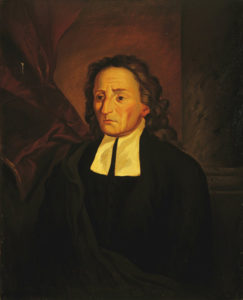
It seemed nothing but reasonable when Giambattista Vico first proposed it in his Scienza Nuova. But, independently, the Jacobins of the French Revolution revealed the intolerance it contained: if some of us have scientifically determined the direction of history, but others disagree, it follows that these others can only be either ignorant or evil. They must accept education, or be considered enemies of progress.
Unfortunately, the ensuing Reign of Terror did not debunk the “science” of history.
Marx picked it up in his theory of historical materialism. He saw confirmation in the unprecedented power, and exploitation, unleashed by the Industrial Revolution: history could be seen as a giant machine, with inputs, processes, and outputs.
But as Lenin, Mao, and others of Marx’s heirs found, at often terrible cost, history is not an Industrial Age machine. Such machines operated linearly and were many orders of magnitude simpler than a human society: in a machine, this part triggers that part in a known sequence, leading to a predictable result. History, however, turns out to be not a machine but a complex phenomenon, in the technical sense of complexity theory: it doesn’t exist until it emerges from a chaos of countless inter-related factors. So while we must do our best make educated guesses, history’s path forward is inherently unpredictable.
This is why five-year plan after five-year plan failed, as did communism itself, even though theory clearly predicted that it was capitalism that would fall. History refused to behave, and ignored the “science” that supposedly defined it. Most countries that tried to build centrally planned economies based on that science have long since given up.
But like many bad ideas, the science of history never really died. Instead it has persisted in a kind of zombie state, in a place and time so far from purges, gulags, re-education camps, and engineered famines.
The zombie lurks in the phrase “political correctness.” Yes, that term is misused by people trying to deflect attention from their intolerance of minorities. But the linkage of the concepts of politics and correctness also points to the left’s version of intolerance.
Tolerance of minorities can be, and is, morally right. That’s because we have recognized it as a moral value, along with others like justice and the rule of law. But “correctness” implies there’s only one way to think about promoting and defending this moral value, when that necessarily involves politics, policy, and economics — in other words, history in the making.
One can’t believe one is “correct” about such things — as opposed to “more likely to be right” — unless one believes history is scientific. In fact, such certainty even misunderstands science, which doesn’t purport to deliver certain answers, only the best ones currently obtainable.
I’m afraid “woke” isn’t much of an improvement. What’s intended by that term is hard to argue with: it’s valuable to be aware of what’s really going on. But it also implies that if you don’t agree with my view of what’s really going on, you’re deluded: asleep and dreaming.
We hear the zombie speak again when we’re told we’re living under “late capitalism.” Possibly we are, but how can we know? The science of history sure got that one wrong the first time.
I assume that many of the people who talk like this aren’t consciously thinking of the science of history — it’s more likely that they’re haunted by it. As John Maynard Keynes said, “Practical men who believe themselves to be quite exempt from any intellectual influence, are usually the slaves of some defunct economist.”

And I’m confident they have the best of intentions, as most of their forebears have had, going back to the Jacobins (at least at their start). But while morality is a force for good, moral certainty has led to many a wrong.
“O Liberty! What crimes are committed in thy name!” exclaimed Madame Roland, a revolutionary who found herself in the wrong faction, just before being Guillotined.
If only the Jacobins had listened to Voltaire:
“What is tolerance? It is the consequence of humanity. We are all formed of frailty and error; let us pardon reciprocally each other’s folly — that is the first law of nature.”
_________________________________
*I’d like to see:
Free college, vocational training, and/or apprenticeships (in recognition that college isn’t the right choice for everyone).
More urgently, free, high-quality child care for all who need it.
Education equated in importance with national defense and funded accordingly, since the most valuable property now is intellectual.
School teachers elevated to a position of respect and compensation equivalent to doctors and lawyers, like they are in many other developed countries whose schools outperform ours.
At the same time, I recognize the need for realistic plans to get to these goals, plans that include the hard work needed to persuade enough of the many different people who make up a pluralistic democracy.