Before I focused on communication and politics, I was a songwriter and producer for Warner-Chappell Music and others. I still make music now and then, and the latest song is “Outside in the Rain,” by the Desert Mothers. You can listen here and find out more here. Preview:
The Liberal Backbone

(Find the full post and podcast at Dastardly Cleverness in the Service of Good.) Ever since I published my book Patriots of Two Nations in 2020, I’ve been working on another one — a much bigger one, as it’s turned out.
And I’m still working on that big book. But with American democracy facing its greatest crisis since the Civil War as a corrupt autocrat returns to the presidency, I want to do my part, however small, to help right now.
So I’m going to try an experiment: writing a shorter, more tightly focused book, and publishing it in real time. I don’t know if this is going to work, but I’m going to set myself the goal of releasing chapters of this book as I write them. They’ll appear as posts and podcast episodes first.
[Read more…] about The Liberal BackboneSlowly and then all at once

Ernest Hemingway is famous for the terse economy of his writing. And in one of the most resonant examples of that quality, he captured the essence of catastrophic failure in just a few words, in his novel The Sun Also Rises.
The alcoholic veteran Mike Campbell is asked how he went bankrupt.
“Two ways,” he says. “Gradually and then quickly.”
As it is with one person going broke, so it is with an entire economy crashing, or countless other catastrophes. There isn’t only a single failure, but a first, and then more — and then a cascade.
And so it is when a democracy fails: it happens slowly and then all at once.
Facing the possibility of a vindictive autocrat becoming president, the LA Times decides not to endorse his opponent, or anyone. Then the Washington Post does the same. Then USA Today and all the other Gannett newspapers follow.
Some of their journalist employees protest, but almost no one walks off the job; a few editorial board members are rare exceptions. We can feel for those who keep their heads down. Given the precarious state of journalism, they know that if they lose the job they have now, there’s almost nowhere else for them to go.
Businesses, too, begin signaling their loyalty and obedience to the potential dictator. Their executives are driven by what they see as their duty to protect against risk — even as far larger risks gather. Nearly all their employees act essentially the same way.
And as the cascade accelerates across society, a democracy that has survived many shocks suddenly fails. The last shock is sudden, even though the preparation was long.
Until recently, it seemed unthinkable to most Americans that our democracy could fail. But it would be far from the first, as historians of democracy know well.
One of the most insightful is Robert Kagan, who, until recently, was a member of the Washington Post editorial board. Kagan immediately recognized the meaning of the Post’s endorsement surrender. He resigned.
It wasn’t the first time he had made such a choice. In 2016, he left the Republican Party after it nominated Donald Trump. He sounded an alarm in an essay for the Post called “This Is How Fascism Comes to America.”
But as Kagan’s principled choices demonstrate, fascism doesn’t have to come. Our democracy doesn’t have to fail.
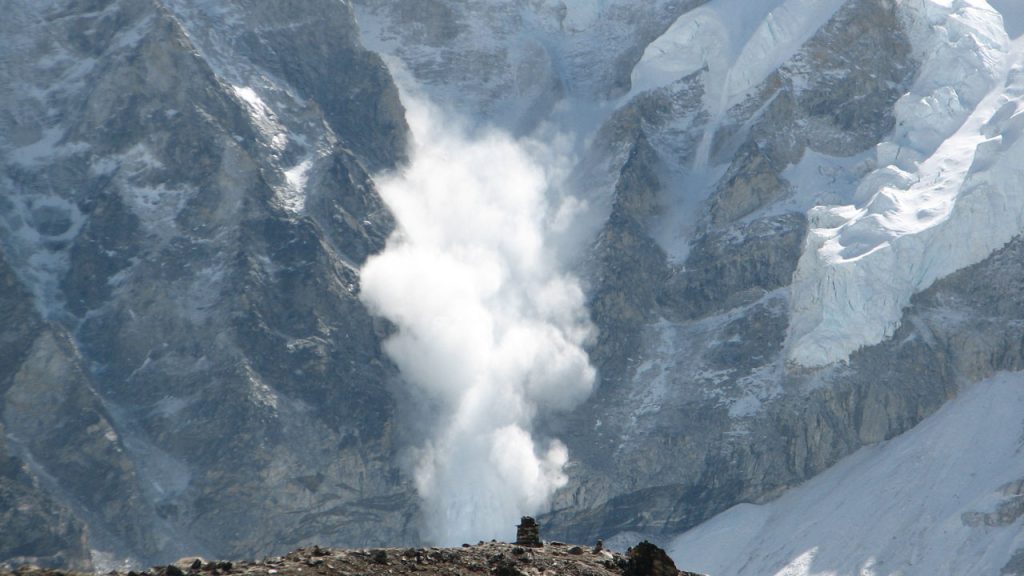
Some failure cascades are like avalanches: impersonal and irresistible. But when a human system fails, each step is a choice by an individual human being — by each of us.
And sometimes, we make the right choice. Nothing is stopping us from doing that now, or at any time — nothing but our own character. “The fault is not in our stars, but in ourselves,” as Shakespeare’s Cassius tells Brutus, with the Roman Republic falling around them.
It’s a deep insight about what we call fate, often so that we can pretend we had no choice in the matter. And it’s a fundamental truth about democracy: in order for self-rule to work, each self must rise to the challenge. The right of freedom is useless to those who forsake the responsibility of freedom.
No matter how carefully designed of our system democracy might be, no matter how clever the workings of its checks and balances, it can only live in the choices each of us makes, each day.
The original designers knew that. One of their greatest fears was that a future generation might not — or might know, but not care.
Let’s hope we’re not that generation.
Or rather, let’s choose not to be that generation.
I’ll close with these words from James Madison, written in 1788:
“Is there no virtue among us? If there be not, we are in a wretched situation. No theoretical checks — no form of government can render us secure. To suppose that any form of government will secure liberty or happiness without any virtue in the people, is a chimerical idea. If there be sufficient virtue and intelligence in the community, it will be exercised in the selection of [our leaders]. So that we do not depend on their virtue, or put confidence in our rulers, but in the people who are to choose them.”
Spencer
(Also published at Dastardly Cleverness in the Service of Good.)
On the Podcast: A Letter to a Friend Voting for Trump
How do you talk to a friend or family member planning to do something you don’t just disagree with, but think is morally wrong? I try to answer that question in the latest Dastardly Cleverness in the Service of Good podcast, with a letter to a friend who’s planning to vote for Donald Trump.
You can listen on Apple Podcasts or any podcast app, at YouTube, or here.
[Read more…] about On the Podcast: A Letter to a Friend Voting for Trump“The War of the Worldviews” at TedX Pugwash
I recently spoke at a TedX conference on Peace in the beautiful village of Pugwash, Nova Scotia. Pugwash and peace have a historic connection: the Nobel Prize-winning Pugwash Conferences on Science and World Affairs were founded in 1957 by the philosopher Bertrand Russell and the nuclear physicist Joseph Rotblat.
On the stage at Peace Hall, I talked about why it seems impossible to find common ground these days: often, there is no common ground, because there isn’t even a common worldview. If it feels as if people live in different realities, it’s because they do. Hence my title, “The War of the Worldviews.”
[Read more…] about “The War of the Worldviews” at TedX Pugwash