• Skip to primary navigation
  • Skip to main content
  • Skip to primary sidebar

Spencer Critchley

  • Home
  • About
  • Media Appearances
    • Broadcast Appearances
    • Print & Web Coverage
    • My Reporting & Commentary
    • Podcast
    • “Saving Democracy” Events
    • News: Real or Fake?
    • Hallmarks of a #BadArgument
  • Music
  • Photos
  • Subscribe
  • Contact

liberalism

The Liberal Backbone

November 13, 2024 by Spencer Critchley

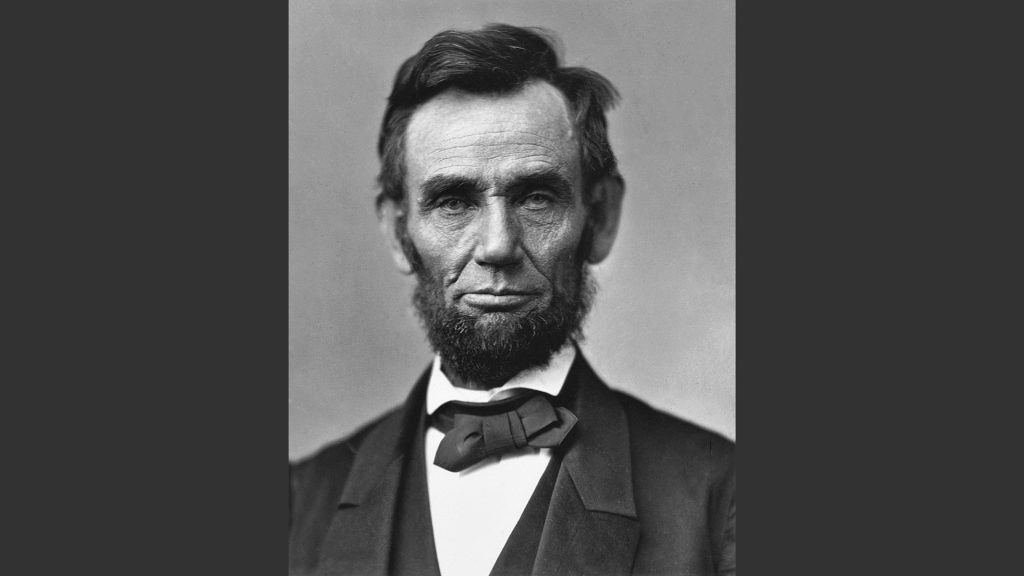
Photo: Abraham Lincoln, looking straight at the viewer
Photo by Alexander Gardner, public domain, via Wikimedia Commons

(Find the full post and podcast at Dastardly Cleverness in the Service of Good.) Ever since I published my book Patriots of Two Nations in 2020, I’ve been working on another one — a much bigger one, as it’s turned out.

And I’m still working on that big book. But with American democracy facing its greatest crisis since the Civil War as a corrupt autocrat returns to the presidency, I want to do my part, however small, to help right now.

So I’m going to try an experiment: writing a shorter, more tightly focused book, and publishing it in real time. I don’t know if this is going to work, but I’m going to set myself the goal of releasing chapters of this book as I write them. They’ll appear as posts and podcast episodes first.

[Read more…] about The Liberal Backbone

Filed Under: Politics & Society Tagged With: democracy, liberalism, politics

Since Obama, is it all downhill for liberalism?

January 22, 2023 by Spencer Critchley

Barack and Michelle Obama at the Obama campaign staff's 2009 Inaugural ball. Photo by Spencer Critchley.
Barack and Michelle Obama at the Obama campaign staff’s 2009 Inaugural ball

It’s 14 years since the first Obama inauguration. It’s time that seems to have flown by, while also spanning an epoch.

I took this photo at the Obama campaign Inaugural ball, and it just popped up as a Facebook Memory. The happiness in those faces, back then, was shared by thousands of staff and volunteers, tens of millions of Americans of widely varying backgrounds and beliefs, and countless millions of people around the world. It looked as if Obama’s promise of change based on hope was coming true, through the power of liberal democracy to bring us all together.

But were we wrong? Was this not the beginning, but the end of that hope? In the time since, we’ve gone from the peak of liberalism to the resurgence of illiberalism, nationally and globally.

Partly because we don’t teach students how to be citizens any more, many people are confused about what liberalism is — doesn’t it just mean you’re a lefty? No. Everyone who believes in modern democracy is a liberal — if they still do believe in democracy. It was won at such great cost, but many of us seem willing to toss it away.

Liberalism is the philosophy of freedom, tolerance, and self-governance on which our democracy is based (which is why it’s often called a liberal democracy).

Usually, Americans only call people on the left liberals. But conservatives are liberals too — if they believe in liberal democracy. And if they don’t, they aren’t conservatives.

Trumpists aren’t conservatives. It’s common to call them that, but it’s a serious mistake. That’s because Trumpism is no form of liberalism at all. Trumpism is classic, nationalist authoritarianism, which can become outright fascism. As practiced by Trump and his most enthusiastic enablers and imitators, it has.

Since Obama’s election (though starting well before), support for authoritarianism has been rising rapidly, most dangerously on the right. But it’s been happening on the left, too.

On the left, authoritarianism had taken the form of the dogmatic intolerance that gets called wokeism — when that term isn’t being used in utterly bad faith by Trumpists, who deploy it against any honest discussion of the bigotry their demagoguery relies on.

The wokeism that actually is a problem is, like Trumpism, hostile to liberalism, although for different reasons. Both claim access to higher sources of authority than liberalism, which is founded not on authority but negotiation. Liberalism is designed for a world where beyond a few core principles, we’re not sure what the highest authority is.

As always with extreme nationalism, Trumpism claims a higher authority based on the imagined destiny of an ethnic nation as personified in a “strong man” leader.

Wokeism claims a higher authority based on the awakened consciousness of the people. “Woke” is originally an African-American slang term for knowing what’s really going on in a hard, unfair world. But it was adapted and appropriated by academic theorists, who gave it a more Marxian meaning of “awakened from false consciousness” — false consciousness being the illusion that an oppressive system is just normal reality. Capitalism, colonialism, identity-based discrimination, or even concepts and language become tools of oppression by building and maintaining false consciousness.

This is why some schools are introducing social justice teaching into seemingly unrelated classes like math and science, which are seen as imposing a Western, capitalist-oriented, false consciousness. And it’s why wokeness focuses so intensely on “correct” terminology, like the theoretically precise but emotionally flat “unhoused” in place of the poetically moving but presumably oppressive “homeless,” or the culturally oblivious “Latinx” in place of a variety of words used by the actual people to whom it’s been applied. If language imposes false consciousness, the thinking goes, it can liberate from false consciousness, if it’s used just right.

The trouble is, once you believe you know better than others what’s false and what’s true, you’re on your way to authoritarianism: those who disagree with you can only be mistaken or evil. The authoritarianism in this case isn’t based on nationalism, but rationalism: the postmodern critical theory from which wokeism springs — and which woke thinkers sometimes capitalize, authoritatively, as Theory.

This is one reason why extreme wokeness seems so much like Puritanism: the elevation of dogma to unquestioned authority. Dogmatists, whether religious or secular, try to make reality conform to their ideas about it, instead of the other way around. The latter happens to be the far less certain, but more tolerant, path of liberalism.

Some of the critiques of liberalism, from both the right and the left, are worth considering. Liberalism’s very reasonableness can feel culturally empty and meaningless, which makes it vulnerable to grand narratives of making the nation “great again.” At the same time, liberalism’s claim of reasonableness has often concealed heavy cultural and economic biases, with full freedom and equality granted only to members of privileged groups. That makes it vulnerable to grand theories of revolutionary liberation.

In both views, the current, liberal order can’t be reformed, but must be torn down.

But although liberalism is far from perfect, it remains the best way we’ve yet found to protect individual people from domination — in large part because it recognizes how flawed all people are. Liberalism accepts imperfection — of knowledge and of character — as inherent in human nature. So self-critique and reform are part of its design, which is why liberal societies have made more progress, of all kinds, than any others.

Authoritarianism, by definition, can’t tolerate critique of itself, and equates reform with corruption.

What’s happened to us since the hope-filled days of Obama isn’t so much a polarization of left vs. right, but of authoritarians vs. liberals, whether of the left or right.

Filed Under: Politics & Society Tagged With: critical theory, illiberalism, liberalism, MAGA, Trumpism, wokeness

How Liberals Lose by Being Right

July 2, 2019 by Spencer Critchley

Professor lecturing, with book and pointer

Liberals’ greatest advantage is that, because we care so much about facts and logic, we’re often right — as Stephen Colbert said, “Reality has a well-known liberal bias.”

But being right is also liberals’ greatest weakness.

How can that be?

Because too many liberals think it’s enough. If it were, we wouldn’t lose so much.

Thanks to our commitment to reason, liberals are often right on policy, whether it’s about health, the environment, crime, civil rights, or the economy.

And polls consistently show that most Americans prefer liberal positions.

The trouble is, while most Americans like liberal policies, many of them don’t like liberals: more identify as conservatives or independents.

One reason for that is the aggressive negative branding campaign Republicans have been carrying out for decades now, often exploiting cultural and/or racial divisions. A famous example: the same Kentucky voters who thought they hated Obamacare loved the same plan when it was presented under a different name (now that so many Americans have tried it, Obamacare is popular no matter what you call it).

But I think another reason is that so many liberals act like everyone who disagrees with them just hasn’t caught up yet.

It doesn’t have to show up as overt arrogance — although it frequently does, as in terms like “red neck,” “gun nut,” or all the different variants of “those idiots.”

It also shows up every time any of us skips over trying to connect with and persuade the other side, and instead just tells them why they’re wrong.

But what if they are wrong? If you’re seriously trying to win an election, that doesn’t matter much. Politics is about persuasion. You don’t persuade many people by ignoring how they think and feel — right or wrong.

Let’s look at one of several hot-button issues that, over decades now, have driven away so many people who used to vote for Democrats: guns.

Most of the evidence supports typically liberal positions on guns, like requiring background checks, training, or other safety measures. And you know what? Most gun owners support them too. 

But so often, the way liberals talk about guns betrays both ignorance of and lack of interest in the priorities and values of gun owners. Instead, liberals sound like what they get accused of being: a distant, disconnected elite telling other people how to live.

Guess what: not every gun owner is a gun nut. Most want to use guns responsibly for recreation or self-defense. Many have treasured memories of growing up in a culture that includes hunting. And the ones who believe owning a gun is a question of freedom? Most aren’t militia wackos. Most sincerely believe in strict limits on government power.

You don’t have to agree with them. But if you can’t or won’t listen to them? You lose them.

And lose elections.

It’s been a serious problem for decades now, stretching from the Reagan Democrats to the Obama-Trump voters. In the face of Donald Trump’s entirely possible re-election, it’s no longer serious, it’s critical.

There’s a bitter irony here. Democratic policies help the working class, while Republicans help the rich. But Republicans, the party of business, know you have to lavish attention on the people you’re trying to sell to, as they have with working Americans.

Too often, Democrats act like it’s not worth their time.

Liberals, we claim to care. Let’s act like it.

As Obama used to say, change is hard. For many people, it’s also scary. Don’t just skip to the right answer.

Do the hard work of change: meet people where they are, listen to them, and persuade them.

Filed Under: Communication, Politics & Society Tagged With: election 2020, liberalism

Primary Sidebar

Search This Site

Broadcast Appearances

Spencer Critchley on Spectrum News 1 LA

Book

Patriots of Two Nations by Spencer Critchley
Kindle & paperback at Amazon. Audio book at Audible. EPUB format here.

New Music: Jailbreak

Cover image for the song "Jailbreak:" a ruined motel by the side of a lonely desert road.

Podcast

Dastardly Cleverness in the Service of Good

Social Media

Substack

YouTube

Music: The Critchleys

The Critchleys: Owen and Spencer Critchley

About Me

Spencer Critchley

Jump to Recent Posts

New Music: The Desert Mothers

The True Crisis

Outside in the Rain

The Liberal Backbone

Slowly and then all at once

On the Podcast: A Letter to a Friend Voting for Trump

“The War of the Worldviews” at TedX Pugwash

Recent Comments

  • terry rankin on “The War of the Worldviews” at TedX Pugwash
  • Spencer Critchley on Why Biden was right to link MAGA, the Confederacy & the Axis in his SOTU address
  • Spencer Critchley on Why Biden was right to link MAGA, the Confederacy & the Axis in his SOTU address
  • Scott Sexton on Why Biden was right to link MAGA, the Confederacy & the Axis in his SOTU address
  • Anonymous on Why Biden was right to link MAGA, the Confederacy & the Axis in his SOTU address

Photos

Spencer Critchley on Fox News' Cavuto
Barack Obama photo by Spencer Critchley
Bruce Springsteen photo by Spencer Critchley
Jay-Z photo by Spencer Critchley
Tiny American flag in crowd at political rally
Director Elizabeth Thompson & Composer/Audio Producer Spencer Critchley with the Emmy for the PBS documentary "Blink."

Find more photos here.

Privacy Policy

Learn how this site collects information and how you can control that.

© 2005–2026 Spencer Critchley