• Skip to primary navigation
  • Skip to main content
  • Skip to primary sidebar

Spencer Critchley

  • Home
  • About
  • Media Appearances
    • Broadcast Appearances
    • Print & Web Coverage
    • My Reporting & Commentary
    • Podcast
    • “Saving Democracy” Events
    • News: Real or Fake?
    • Hallmarks of a #BadArgument
  • Music
  • Photos
  • Subscribe
  • Contact

freud

The Psychology of Sedition

January 5, 2021 by Spencer Critchley

How do we make sense of the descent of Trump supporters, including people we know, into outright sedition? People who grew up reciting the Pledge of Allegiance are now actively betraying “the flag of the United States of America and the republic for which it stands” by supporting an attempted overthrow of democracy.
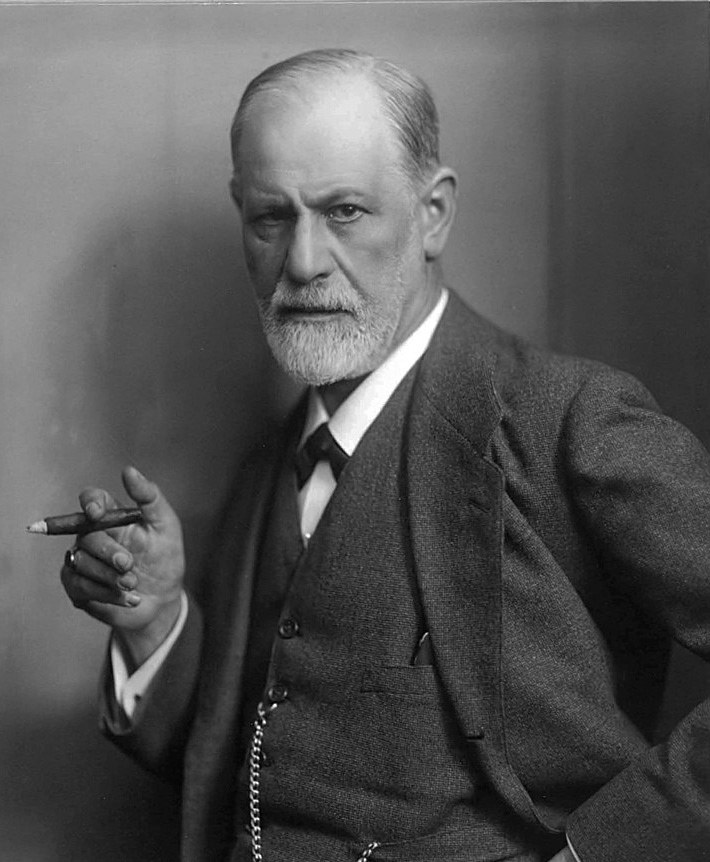
Photo of Sigmund Freud by Max Halberstadt, public domain, via Wikimedia Commons
Photo of Sigmund Freud by Max Halberstadt via Wikimedia Commons

In my book, I describe the two very different visions of what our republic is, and how people can sincerely believe themselves to be patriots of two very different nations, both called the United States.

But I also describe how unscrupulous leaders can exploit this sincere, horizontal division to elicit something underneath it: the worst instincts in human nature.

That’s what we’re seeing now. At this point, to believe Trump’s outrageous lies is to want to believe them. Even allowing for the right wing media bubble, the malign effects of social media algorithms, foreign disinformation campaigns, or the sorry state of civics education, the self-contradictory conspiracy theories we’re hearing don’t survive a moment’s reflection — whether that reflection is logical or moral. You don’t need to be brilliant or even particularly well-informed to see that what Trump is doing is just wrong.

But with Trump, persuasion has long since stopped mattering.

The point is not persuasion, but permission.

[Read more…] about The Psychology of Sedition

Filed Under: Leadership & Management, Politics & Society Tagged With: Donald Trump, freud

Trump and the Lure—for All of Us—of Evil for Its Own Sake

September 20, 2020 by Spencer Critchley

Some of the attraction to Trump is based on a desire to indulge in evil for its own sake: for the sheer, dark pleasure of releasing humanity’s ugliest urges — and that’s a desire that’s not found only in Trump supporters but in all of us. I got a chance to go into this in depth with Dean Walker, the host of an original and thoughtful video podcast called The Poetry of Predicament. Here’s an excerpt (starting at 27:56), with a transcript:

In the book [Patriots of Two Nations] I talk about the difference between Marx and Freud as a dichotomy that expresses that [the Jungian shadow self] and you can extend that from Freud to Jung. So Marx thought he had discovered the science of history. This is interesting, because this is one of the roots of intolerance on our side of the political spectrum, of liberals, that we often overlook. We overlook this shadow side of ourselves, that there is a form of liberal intolerance and even authoritarianism that we often think we don’t have — that’s the other side that’s like that. We’re all about community, you know, and helping each other, and looking after the vulnerable, etc. But there is a form of liberal intolerance that’s very serious and can get quite, well, extremely dark.

And I think the roots are in the Enlightenment gone mad. There are situations in history where the Enlightenment has gone mad and when the Counter-Enlightenment has gone mad. The Enlightenment gone mad is when you’re hyper-rational and you think rationality explains everything. And Marx thought he had discovered the science of history. This was a trend in German philosophy at the time. And if you think you’ve discovered the science of history and therefore, you know, the science of politics and how government should be organized, you’re on the road to deep intolerance, because anybody who disagrees with you is either wrong or corrupt, right? Those are the only choices. So they have to either be reeducated or stopped, you know, probably through punishment, possibly through death.

And the results of how people interpreted what Marx was saying — Marx, by the way, was also quite an anti-semite, I’m afraid it was quite common back then — but the results are things like the Marxist-Leninist dictatorship in the Soviet Union and the other countries, like Maoist China and Cambodia, and other countries that followed suit, where, in the interests of a theory of how society was supposed to work, horrible crimes were committed and unspeakable cruelties. In the Soviet Union, tens of millions of peasants died and lot of that was because, starting with Lenin, they were trying to convert real-world Russian peasants into theoretical Marxist-Leninist proletarians and people literally died or were imprisoned or tortured in service of that hyper-rationalist, soulless, heartless ideal.

The Counter-Enlightenment gone mad is Nazism, which is an extremely hyper-romantic vision of national destiny descended from what Wagner was talking about. Wagner, in the Ring Cycle, was attempting to express the soul of Germany, of the German people. And it begins with the Rhinemaidens as an image of perfect innocence and joy, guarding the Rheingold, which is the gold of the nation of Germany and is the essential goodness and wealth and power of the German people. And what are they threatened by? The evil dwarf Alberich, who’s a stereotypical Jew. We see that strand throughout history, down to the present day in the United States, with the bigotry we see in the United States, and people talking about Make America Great Again, which is descended straight from that vision of a pure state of national greatness that has to be recovered.

But as you can see, there is just a great deal of darkness waiting there to be tapped. And I mentioned when I launched into this the dichotomy of Marx versus Freud. So Marx is hyper-rationalist, in my view, and his terrible mistake was thinking he had discovered a science of history. Freud came along later. I often wonder what would have happened if Marks had lived a little later and had met Freud, and would it have caused him to rethink things?

Because Marx was also extremely naive about human nature. He thought that the reason people did bad things was because of private property. And if we just removed private property — and there are many liberals who still feel this way, this idea has not gone away — if we only didn’t have capitalism and private property, people wouldn’t be greedy and heartless and cruel to each other. That’s an extremely naive view of human nature, in my view. And in fact, it’s no more sophisticated or aware than any religious viewpoint. It is essentially, I would say, a religious statement of belief, not founded on any understanding of how human beings actually work. And Freud thought Marx was naive.

Freud understood — although he wasn’t right about everything by any means, but he at least intuitively understood — that we have these competing drives towards life and death: Eros and Thanatos. He didn’t use that word, but referring to the death drive, which is the way he described it, there’s something in us that just wants to destroy and hate just for the sheer pleasure of it. And I think Freud was a lot closer to the truth. These horrible things we’ve seen in world history and in American history, with slavery, these awful things we can point to down to the present day, with locking up little Children in cages on the border.

I think that’s what we have to understand, that that’s in us. And the extent to which we think we understand that problem by saying there’s something evil about Trump supporters, for example, or there’s something evil about Trump himself, I think we’re missing the point. There’s something evil in human nature — if we want to use that word, “evil” — that we need to turn towards and recognize and understand, because if we keep casting it out of ourselves and saying it’s only in those other people, we’re just going to keep repeating this cycle.

Filed Under: Politics & Society Tagged With: evil, freud, marx, trump

Primary Sidebar

Search This Site

Broadcast Appearances

Spencer Critchley on Spectrum News 1 LA

Book

Patriots of Two Nations by Spencer Critchley
Kindle & paperback at Amazon. Audio book at Audible. EPUB format here.

New Music: Jailbreak

Cover image for the song "Jailbreak:" a ruined motel by the side of a lonely desert road.

Podcast

Dastardly Cleverness in the Service of Good

Social Media

Substack

YouTube

Music: The Critchleys

The Critchleys: Owen and Spencer Critchley

About Me

Spencer Critchley

Jump to Recent Posts

New Music: The Desert Mothers

The True Crisis

Outside in the Rain

The Liberal Backbone

Slowly and then all at once

On the Podcast: A Letter to a Friend Voting for Trump

“The War of the Worldviews” at TedX Pugwash

Recent Comments

  • terry rankin on “The War of the Worldviews” at TedX Pugwash
  • Spencer Critchley on Why Biden was right to link MAGA, the Confederacy & the Axis in his SOTU address
  • Spencer Critchley on Why Biden was right to link MAGA, the Confederacy & the Axis in his SOTU address
  • Scott Sexton on Why Biden was right to link MAGA, the Confederacy & the Axis in his SOTU address
  • Anonymous on Why Biden was right to link MAGA, the Confederacy & the Axis in his SOTU address

Photos

Spencer Critchley on Fox News' Cavuto
Barack Obama photo by Spencer Critchley
Bruce Springsteen photo by Spencer Critchley
Jay-Z photo by Spencer Critchley
Tiny American flag in crowd at political rally
Director Elizabeth Thompson & Composer/Audio Producer Spencer Critchley with the Emmy for the PBS documentary "Blink."

Find more photos here.

Privacy Policy

Learn how this site collects information and how you can control that.

© 2005–2026 Spencer Critchley