Before Trump, presidents based most clemency decisions on what they thought would best serve justice. But in pardoning war criminals, allies who refused to “flip” on him, or the simply well-connected, Trump is serving only himself.
The damage goes way beyond the individual pardons, especially because they’re so typical of all his behavior. Trump’s open cheating corrupts our whole system, by making corruption seem normal, or even “smart,” as he boasts.
It degrades what the Founders knew as “civic virtue” — our shared faith in democratic values — without which democracy can’t survive. Many of Trump’s followers see what he’s doing, but accept it because they think everything is corrupt and “at least he’s on our side.”
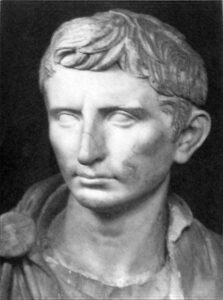
This is one of many frightening parallels between the state of our democracy and the fall of one of its inspirations, the ancient Roman Republic. Caesar Augustus took over when Romans, like many of us, had lost their faith in democracy. Augustus promised to make Rome great again — as long as the people gave him all the power and accepted corruption as normal.
Trump’s pardons for the 2007 Nisour Square massacre in Iraq are among the most shameful actions by any president: a great wrong committed for the pettiest of motives. The Nisour Square victims were innocent civilians — including children — who were shot down and blown up by four Blackwater contractors. All Americans should read the heart-rending account of Thomas O’Connor, the leader of the FBI team that investigated this war crime and its coverup. As with the My Lai massacre in Vietnam, we need to face what has been done in our name, especially because following Trump’s pardon, all of us now carry the shame.
Presidents have often made controversial clemency decisions for what they believed were the right reasons. In 1862, Abraham Lincoln defied great pressure and commuted the death sentences of 265 of 303 Dakota Sioux Indians convicted of killing hundreds of settlers during an uprising. Lincoln knew that many of the condemned Indians were probably innocent, so he chose to study the details of every case personally. He said, “I cannot afford to hang people for votes.” That’s a leader.
Less clear-cut was the decision by Lincoln’s successor, Andrew Johnson, to pardon nearly all Confederate rebels. On the one hand, it might be seen as Lincolnesque generosity, but on the other hand, Johnson was notoriously supportive of slave-owners.
Gerald Ford preemptively pardoned Richard Nixon for Watergate crimes because Ford believed healing the nation was more important than punishing Nixon. But many voters disagreed, and that may have been what cost Ford his re-election.
There have been other clemency decisions that looked as outright shady as Trump’s, like Bill Clinton’s pardon of campaign donor Marc Rich and his wife Denise, or George H.W. Bush’s pardons of the leaders of the Iran-Contra scheme, in which Bush was implicated. But by far, most of the pardons issued by all presidents before Trump were legitimate.
Clemency is supposed to be granted only when the scales of justice are out of balance. The framers of the Constitution believed that like the English king, the American president should be able to intervene when punishment was “too sanguinary and cruel,” as Alexander Hamilton wrote in Federalist 74. Hamilton was probably too optimistic in trusting that the pardon power would always “inspire scrupulousness and caution” in future presidents. He and the other framers knew there would be some shabby behavior at the state and local level, but assumed that national leaders wouldn’t rise so high unless they were people of character and honor. As Hamilton wrote in Federalist 68:
The process of election affords a moral certainty, that the office of President will never fall to the lot of any man who is not in an eminent degree endowed with the requisite qualifications. Talents for low intrigue, and the little arts of popularity, may alone suffice to elevate a man to the first honors in a single State; but it will require other talents, and a different kind of merit, to establish him in the esteem and confidence of the whole Union, or of so considerable a portion of it as would be necessary to make him a successful candidate for the distinguished office of President of the United States.
Hamilton was a genius, but he sure got that wrong, didn’t he?
In the normal modern clemency process, applications are reviewed by the Office of the Pardon Attorney within the Department of Justice and recommendations are then sent to the president. Trump frequently skips the process and just pardons friends and allies, like the ones who helped him obstruct the Mueller investigation, or people whose stories he can exploit politically, like the Nisour Square four, or Eddie Gallagher, the Navy Seal convicted of other war crimes in Iraq.
According to DOJ records going back to 1897 (presented visually by Pew Research), the fewest applications were received during George H.W. Bush’s one term: 1,466. Barack Obama’s two terms saw the most: 36,544. The Trump administration has received 10,051 requests, the overwhelming majority of which have been denied or ignored. With the addition of his pre-Christmas handout of 49 pardons and commutations, Trump has given clemency in 93 cases, by far the lowest percentage recorded by the DOJ.
But each one was hand-picked.